

To hunger is to be alive and to hope.
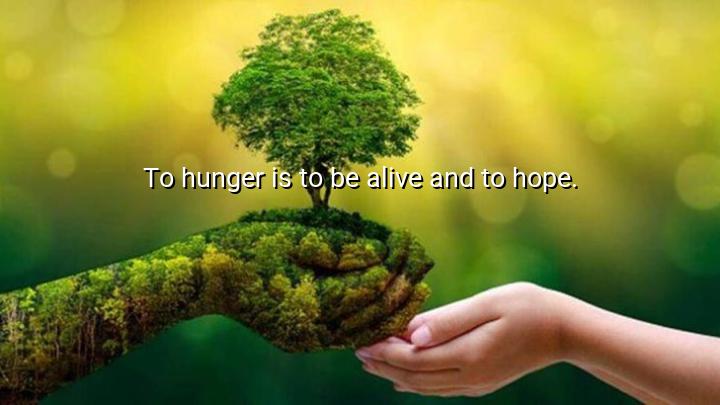




The quote "To hunger is to be alive and to hope" by Crescent Dragonwagon explores the connection between hunger, life, and hope. Dragonwagon suggests that hunger, whether literal or metaphorical, is not just a sign of physical need but also a symbol of desire, growth, and yearning. Hunger reflects the drive for something more—be it food, love, success, or personal fulfillment. In this way, to hunger is to be engaged in the process of living, always reaching toward what we lack or desire, which inherently ties to hope for something better or different.
The origin of this quote comes from Dragonwagon's exploration of the human condition in her writings. Known for her work in cookbooks, fiction, and poetry, Dragonwagon often addresses themes of nourishment, both physical and emotional. In this quote, she weaves together the literal and figurative aspects of hunger, demonstrating how the experience of wanting something—be it sustenance or a larger life goal—drives us forward and keeps us alive with possibility.
Dragonwagon’s words suggest that hope and hunger are intertwined. Hunger, in its most basic form, represents the desire for survival, but in its broader sense, it signifies the urge to grow, transform, and aspire. Just as we yearn for food when we are hungry, we also yearn for change, improvement, or fulfillment, and that yearning fuels our hope for the future. The hope for what we do not yet have is what propels us through life.
In essence, the quote encourages an appreciation for the deep, human drive that hunger represents—not just as a physical sensation, but as a reflection of our need for purpose, growth, and progress. It connects hope with the vitality of being alive, suggesting that the act of longing for something better is a key part of the experience of living.

AAdministratorAdministrator
Welcome, honored guests. Please leave a comment, we will respond soon