

To err is human; to forgive, divine.
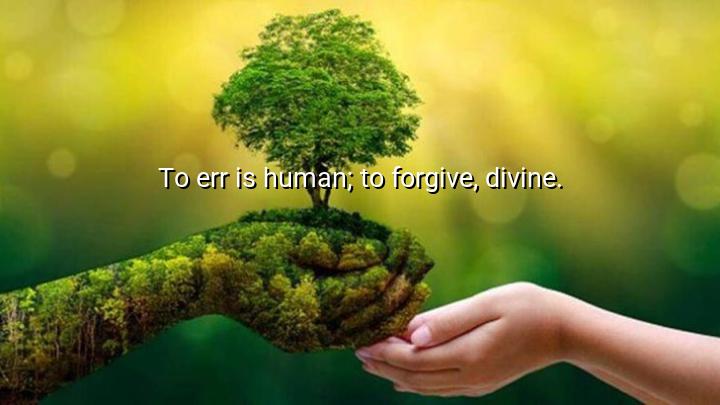




The quote "To err is human; to forgive, divine" by Alexander Pope speaks to the inherent imperfection of human nature and the higher moral quality of forgiveness. Pope suggests that making mistakes, or erring, is a natural part of being human, as all people are prone to flaws and shortcomings. However, he contrasts this with the divine act of forgiving, which is seen as an elevated or almost supernatural virtue, requiring a level of compassion, mercy, and moral strength that goes beyond the ordinary human experience.
Pope’s use of the word "divine" implies that forgiveness is a quality that is often associated with higher powers, such as God. In many religious traditions, forgiveness is considered a godly attribute, one that is central to the teachings of Christianity and other faiths. Pope's quote suggests that while humans may struggle with forgiveness due to anger, pride, or hurt, the ability to forgive others is a virtue that reflects a higher moral standard and brings individuals closer to the divine.
The origin of this quote comes from Pope's "An Essay on Criticism" (1709), where he explores themes of human nature, ethics, and the pursuit of wisdom. Pope, known for his satirical and philosophical works, often reflected on human behavior and the moral challenges people face. This quote encapsulates his broader perspective on the importance of virtue and self-improvement, encouraging people to recognize their flaws while striving toward the noble ideal of forgiveness.
In essence, Pope’s quote highlights the tension between human imperfection and the moral aspiration to forgive. While making mistakes is an inherent part of being human, the act of forgiving represents a higher moral calling that transcends ordinary human behavior. It serves as a reminder that through forgiveness, individuals can rise above resentment and embrace compassion and mercy, qualities that reflect a divine or transcendent level of humanity.

AAdministratorAdministrator
Welcome, honored guests. Please leave a comment, we will respond soon