

To educate a man in mind and not in morals is to educate a menace to society.
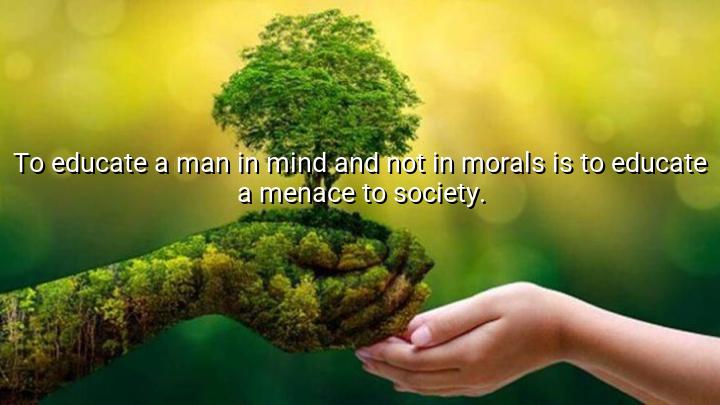




The quote “To educate a man in mind and not in morals is to educate a menace to society.” by Theodore Roosevelt emphasizes the importance of balancing intellectual education with moral education. Roosevelt warns that if someone is given knowledge and skills without a foundation in ethics and values, that person could misuse their intelligence in harmful or destructive ways. Education, therefore, is not simply about developing the mind, but also about shaping character.
The origin of this quote reflects Roosevelt’s broader philosophy as both a U.S. president and a thinker concerned with civic responsibility. Living during the Progressive Era, Roosevelt believed in reforming society through education, discipline, and a sense of duty to the public good. His experiences as a politician, reformer, and advocate of “the strenuous life” shaped his conviction that knowledge without morality could lead to corruption, exploitation, and injustice. This view was particularly relevant in an age when rapid industrialization and technological progress often outpaced ethical considerations.
The meaning of the quote highlights the potential dangers of producing brilliant minds who lack a moral compass. A person educated only in logic, science, or strategy, without being grounded in compassion, fairness, and responsibility, might use their abilities for selfish or destructive purposes. For instance, great intelligence could be turned toward manipulation, oppression, or even violence if not tempered by morality. Roosevelt thus underscores that education must aim to create not only competent individuals but also good citizens.
This perspective continues to resonate in today’s world. In an era where technological innovation and knowledge acquisition are highly valued, Roosevelt’s words remind us of the equal need for ethical frameworks. True education must foster both wisdom and virtue, ensuring that progress serves humanity rather than undermines it. By blending intellectual growth with moral responsibility, education can uplift society instead of endangering it.

AAdministratorAdministrator
Welcome, honored guests. Please leave a comment, we will respond soon