

Those who are not very good at understanding mental health issues are not going to know what other people are going through in depression. You have to kind of put yourself in somebody else's shoes.
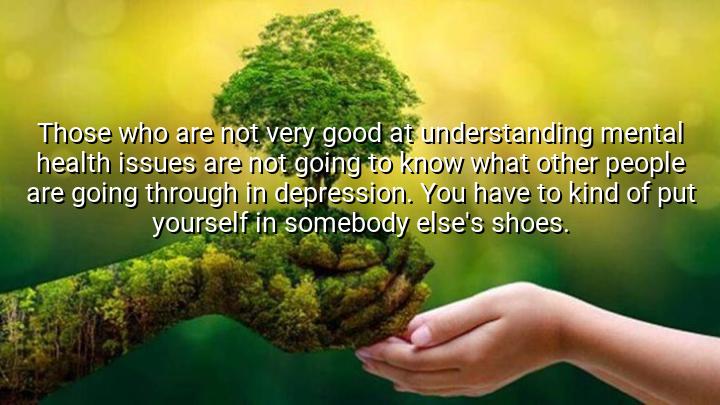




The quote by M. Shadows, "Those who are not very good at understanding mental health issues are not going to know what other people are going through in depression. You have to kind of put yourself in somebody else's shoes," emphasizes the importance of empathy and understanding when it comes to mental health. Shadows points out that mental health issues, especially depression, are often misunderstood by those who have not personally experienced them. Understanding the struggles that others face requires empathy and the ability to see the world from their perspective, rather than simply judging or dismissing their experiences.
Shadows highlights the difficulty of fully grasping the complexities of depression if one has never gone through it themselves. Mental health challenges like depression are often invisible, and it can be hard for others to recognize the internal battles that individuals may be facing. The quote suggests that to truly understand and support someone with mental health struggles, one must make an effort to approach the situation with compassion and a willingness to understand the emotional and psychological burdens they carry.
The origin of this quote comes from M. Shadows, the lead vocalist of the band Avenged Sevenfold. Known for being open about mental health, Shadows has spoken on the importance of addressing the stigma around mental illness. His experiences and reflections on these issues have made him an advocate for raising awareness about the importance of mental health and supporting those who struggle with conditions like depression.
Shadows' statement serves as a reminder that true understanding of mental health requires more than just intellectual knowledge—it requires empathy, compassion, and an effort to connect with the emotional experiences of others. By encouraging people to "put themselves in somebody else's shoes," Shadows advocates for greater awareness and support for individuals facing mental health challenges, fostering a more inclusive and compassionate society.

AAdministratorAdministrator
Welcome, honored guests. Please leave a comment, we will respond soon