

Those among them that have not received our religion do not fright any from it, and use none ill that goes over to it, so that all the while I was there one man was only punished on this occasion.
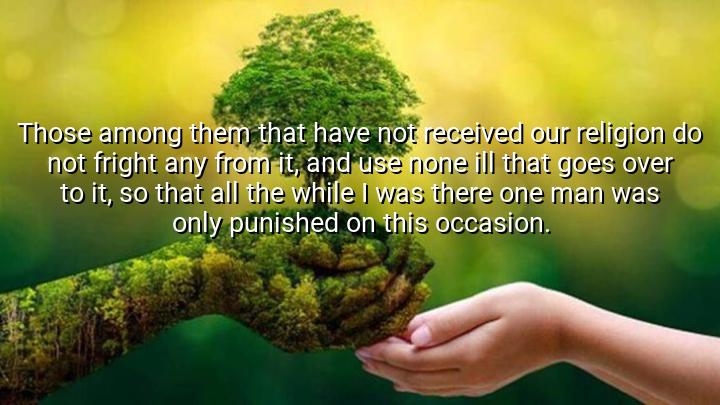




Thomas More’s quote reflects his views on religious tolerance and the treatment of those who choose to adopt a different faith. The phrase "Those among them that have not received our religion" refers to people who have not embraced Christianity or a particular religious practice. By saying, "do not fright any from it, and use none ill that goes over to it," More emphasizes the importance of allowing others to follow their own spiritual paths without facing harm or coercion. He suggests that the adoption of a new faith should not result in violence, persecution, or punishment.
More’s point is that, while some people may not share the same religion, they should not be treated unjustly or punished for their beliefs. This sentiment aligns with his broader views on justice and the need for respect toward individual freedom of belief. His mention of "one man was only punished on this occasion" underscores that violence or punishment for religious reasons should be rare and exceptional, not commonplace.
As a devout Catholic and a prominent figure during the English Renaissance, Thomas More was known for his firm stance on religious integrity but also for his advocacy for fairness and moral treatment. His work as a statesman, author, and martyr who was executed for refusing to recognize the King as head of the Church reflects his commitment to religious principles, yet he often advocated for humane treatment of those with different beliefs, which this quote exemplifies.
The origin of this quote is likely tied to More's writings, particularly his work Utopia, in which he explores ideas of religious tolerance, ideal governance, and social harmony. While he firmly believed in the truth of his own Catholic faith, his thoughts on religious tolerance suggest a recognition of the complexities of managing diverse faiths and beliefs within a society. The quote highlights his desire for a more compassionate and fair treatment of others, particularly in the context of religious diversity.

AAdministratorAdministrator
Welcome, honored guests. Please leave a comment, we will respond soon