

This is a day of little faith - of few convictions - a day when men seem to have no great causes and no great passions. So in frustration, in disappointment, they are inclined to say, 'You can't change human nature.' It is true that we cannot change human nature. But God can.
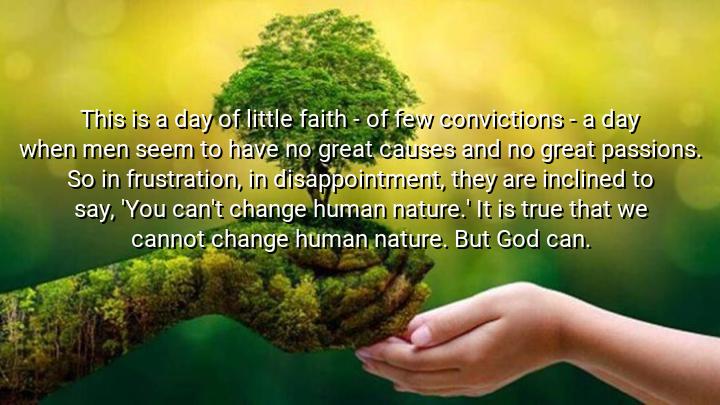




The quote by Peter Marshall, "This is a day of little faith - of few convictions - a day when men seem to have no great causes and no great passions," reflects a poignant observation about a time marked by disillusionment and a lack of strong beliefs or ideals. It suggests that many people, feeling frustrated and disappointed, have resigned themselves to a cynical view that human nature is unchangeable. This attitude reveals a broader sense of hopelessness and a struggle to find meaning or purpose in challenging times.
Peter Marshall then challenges this resignation by asserting, "It is true that we cannot change human nature. But God can." This powerful statement introduces a spiritual dimension, emphasizing that while human flaws and limitations may be fixed, divine intervention offers the possibility of true transformation. It speaks to the belief that faith in God can inspire change beyond human capability, giving hope and purpose even when personal efforts seem futile.
The origin of this quote lies in Peter Marshall’s role as a prominent Scottish-American preacher and chaplain to the United States Senate during the mid-20th century. Known for his inspiring sermons and spiritual guidance during times of uncertainty, Marshall’s words encourage people to look beyond their own limitations and place their trust in a higher power. His message promotes faith as a source of strength and renewal in a world that often feels cynical and divided.
Ultimately, this quote calls for a rekindling of conviction, passion, and faith. It reminds us that while human nature may have its flaws, hope and transformation are possible through spiritual belief. Marshall’s words remain relevant today, urging individuals to overcome despair by trusting in a power greater than themselves.

AAdministratorAdministrator
Welcome, honored guests. Please leave a comment, we will respond soon