

Thinking about death makes you analyse what life is. Anxiety makes you curious, and curiosity leads to understanding. I wouldn't be a writer without depression.
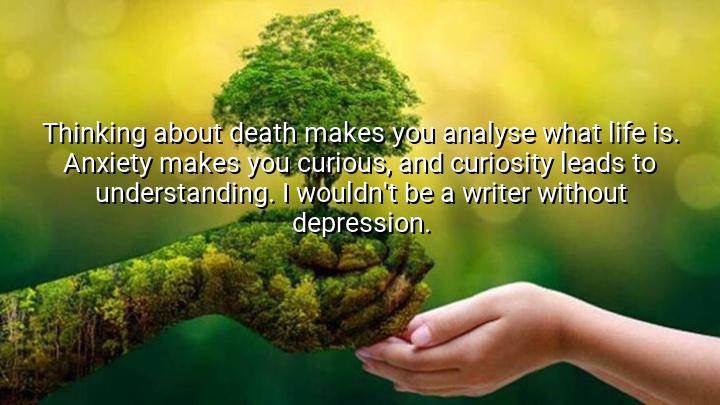




In this quote, Matt Haig, an author known for his work on mental health, discusses how his personal experiences with death, anxiety, and depression have shaped his approach to life and writing. Haig suggests that contemplating death leads to a deeper reflection on the meaning of life itself, prompting introspection and a search for understanding. The connection between anxiety and curiosity suggests that difficult emotions can spark a desire to learn and explore, ultimately leading to insight and growth.
Haig’s statement also reveals how his personal struggles with mental health, particularly depression, have been instrumental in his development as a writer. He acknowledges that without his experiences with depression, he might not have found the same drive to reflect on the human condition or express these reflections through writing. This suggests that suffering and emotional pain can serve as powerful motivators, leading individuals to engage with deeper existential questions and channel those reflections into creative expression.
The quote also reflects Haig’s belief in the transformative power of difficult emotions. While depression is often seen as a burden, Haig points out that it also led him to curiosity about the world and an understanding of life that he might not have reached otherwise. This perspective aligns with his broader views on mental health, where he advocates for seeing mental health struggles as part of a larger process of personal discovery and growth, rather than just something to be overcome.
The origin of this quote comes from Haig’s work, particularly his book Reasons to Stay Alive, where he shares his personal journey through mental illness and how it affected his outlook on life and writing. His reflections offer a candid and compassionate look at how difficult emotions, though painful, can lead to profound personal growth and creative expression. Haig’s insights have resonated with many readers, providing comfort and understanding for those dealing with similar challenges.

AAdministratorAdministrator
Welcome, honored guests. Please leave a comment, we will respond soon