

Think of our physical sustenance. It is truly heaven-sent. The necessities of air, food, and water all come to us as gifts from a loving Heavenly Father.
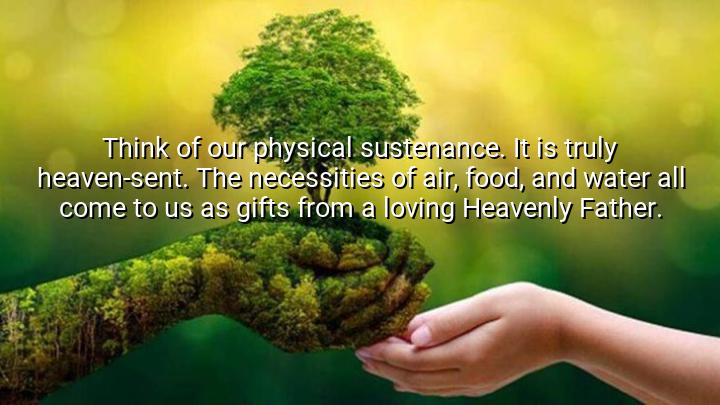




The quote "Think of our physical sustenance. It is truly heaven-sent. The necessities of air, food, and water all come to us as gifts from a loving Heavenly Father." by Russell M. Nelson highlights a deeply spiritual perspective on the basic elements of life. Nelson emphasizes that air, food, and water—the essentials that keep us alive—should not be taken for granted but viewed as divine blessings. By referring to them as "heaven-sent," he reminds us that these physical provisions are expressions of God's love and care for humanity.
Russell M. Nelson, the current President of The Church of Jesus Christ of Latter-day Saints, often speaks about the connection between faith, gratitude, and daily living. This quote likely comes from one of his talks or writings where he reflects on the gifts of life and encourages believers to recognize the spiritual significance of everyday things. His teachings frequently blend religious doctrine with practical awareness, urging individuals to see the hand of God even in the most routine aspects of existence.
The use of the term "gifts" suggests that these necessities are not entitlements, but rather acts of divine generosity. Nelson’s message encourages a posture of gratitude—to appreciate not only life's grand blessings but also the quiet miracles we experience every day. Breathing fresh air, eating a meal, or drinking water become not just biological functions, but moments to reflect on the benevolence of a higher power.
Ultimately, Nelson's quote calls for a deeper spiritual mindfulness in how we view the natural world and our place within it. It invites us to see sustenance not only as physical support but as a reminder of our dependence on God and the sacredness of even the simplest aspects of life. It's a powerful reminder that gratitude and reverence can transform the ordinary into something holy.

AAdministratorAdministrator
Welcome, honored guests. Please leave a comment, we will respond soon