

No, we don't own our children. Our parental privilege is to love them, to lead them, and to let them go.
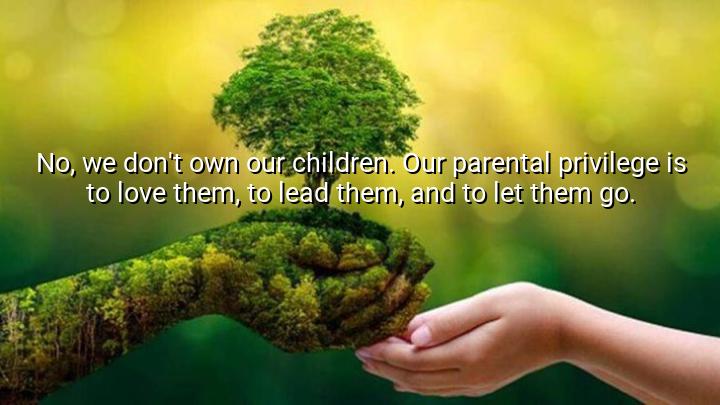




The quote "No, we don't own our children. Our parental privilege is to love them, to lead them, and to let them go" by Russell M. Nelson emphasizes the concept that children are not possessions but individuals with their own agency and destiny. Nelson, a prominent leader in The Church of Jesus Christ of Latter-day Saints, reflects on the sacred role of parents in guiding their children, rather than controlling them. The idea that parents have a privilege to love, guide, and eventually release their children is central to the quote, highlighting the importance of fostering independence and self-determination in the younger generation.
At the core of this quote is the understanding that parenthood is about providing the necessary love and guidance to help children grow into their own identity and responsibilities. Nelson asserts that parents are not meant to "own" their children but rather to prepare them for the world by offering them the tools to live independent lives. Leading them and teaching them values, principles, and life skills is vital, but ultimately, parents must respect their children’s freedom to make their own choices and forge their own path.
Nelson’s perspective on parenthood stems from his beliefs about the sacred nature of family and the spiritual responsibility parents hold. As the president of The Church of Jesus Christ of Latter-day Saints, Nelson frequently speaks about the role of parents in raising children with love, faith, and respect for their individuality. His teachings emphasize that parenting involves not just control but a balance between providing nurturance and allowing children to experience life as autonomous beings.
In essence, Nelson’s quote conveys the idea that parental love and responsibility extend beyond mere guardianship. Parents are meant to be guides who help children grow and eventually make their own decisions. The privilege of parenthood lies in helping children achieve their full potential while acknowledging that, ultimately, they belong to themselves. The freedom to "let them go" reflects a mature understanding of what it means to raise children with love and respect for their personal journey.

AAdministratorAdministrator
Welcome, honored guests. Please leave a comment, we will respond soon