

There's nothing like impending death to rouse you from existential boredom.
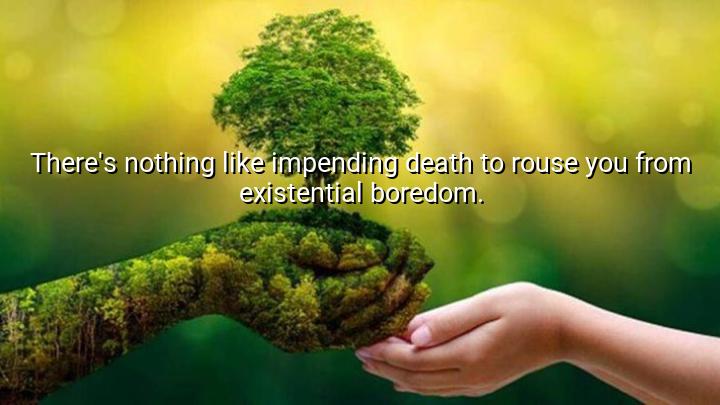




The quote "There's nothing like impending death to rouse you from existential boredom" by Roger Ebert speaks to the idea that the awareness of mortality can awaken a deeper sense of purpose and urgency in life. Ebert suggests that when faced with the reality of death, people are often jolted out of the mundane or boring aspects of daily life. This existential reflection forces individuals to confront what truly matters, compelling them to engage more fully with life and appreciate the fleeting nature of time.
Ebert’s words also touch on the idea of existentialism, where individuals are often caught in a state of boredom or dissatisfaction with the routine of existence. Impending death, whether real or metaphorical, forces people to break free from this numbness and consider the broader implications of their actions, their relationships, and their values. In facing death, there is an opportunity to live more intentionally and with greater awareness of the limited time one has.
The origin of this quote lies in the reflections of Roger Ebert, an influential American film critic and writer, who, after battling cancer, became known for his deeply philosophical musings on life, death, and purpose. Ebert’s own experience with illness and mortality led him to explore themes of existentialism and the human condition, using his platform to discuss profound questions about what it means to live a meaningful life.
Ultimately, Ebert’s quote reminds us that the awareness of death has the power to disrupt our complacency and encourage a deeper engagement with life. By acknowledging our mortality, we are reminded to embrace the present moment and live with more intentionality, moving beyond the trivial concerns that often dominate our attention.

AAdministratorAdministrator
Welcome, honored guests. Please leave a comment, we will respond soon