

There must be freedom for all to live, to think, to worship, no book, no avenue must be closed.
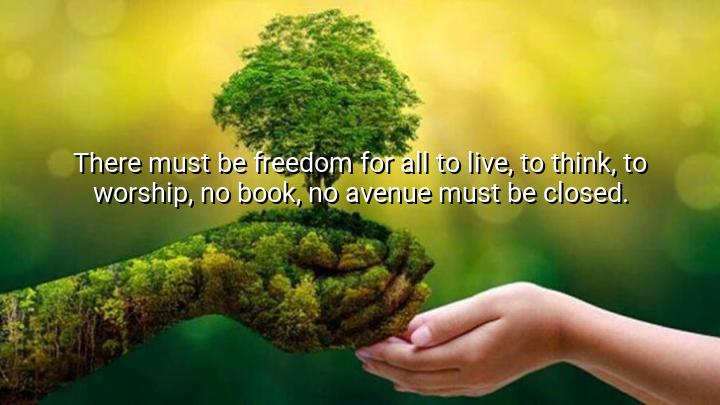




In this quote, James Larkin, an Irish labor leader and social activist, advocates for the fundamental rights of individuals to live with freedom and dignity. He stresses that everyone should have the freedom to think independently, to worship according to their own beliefs, and to access knowledge without restriction. By stating "no book, no avenue must be closed," Larkin emphasizes the importance of access to information, ideas, and opportunities as key components of a free society. This reflects his commitment to social justice and equal rights for all, irrespective of background or belief.
Larkin’s words challenge any form of oppression or restriction that limits human potential and expression. His statement is a call to ensure that society remains open and inclusive, where every individual can freely explore, learn, and practice their values without fear of censorship or persecution. The quote suggests that true freedom is not just about physical liberty but also about the freedom of thought and expression, which are essential for a flourishing, democratic society.
The mention of worship also hints at the importance of religious freedom, a principle Larkin upheld as part of his broader vision for societal equality. He recognized that personal beliefs, whether religious or ideological, are an intrinsic part of human identity and that these beliefs should be free from external interference. Larkin’s focus on freedom reflects the broader social and political struggles of his time, especially in the context of labor rights and the fight for worker’s dignity during the early 20th century.
The origin of this quote comes from James Larkin, who was a prominent figure in the Irish labor movement. Known for his efforts in organizing workers and advocating for their rights, Larkin was a key proponent of freedom, equality, and justice. His activism, particularly during the early 1900s, was focused on achieving better working conditions, wages, and legal protections for the working class. This quote encapsulates Larkin’s belief that true freedom involves not only the right to live and express oneself but also access to knowledge, culture, and the ability to worship as one chooses.

AAdministratorAdministrator
Welcome, honored guests. Please leave a comment, we will respond soon