

There may be Peace without Joy, and Joy without Peace, but the two combined make Happiness.
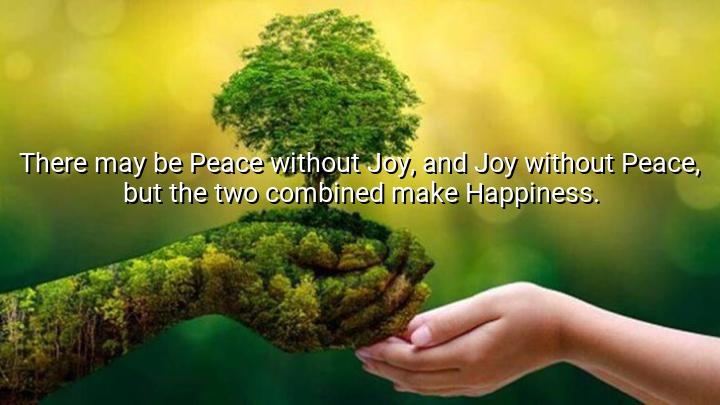




In this quote, John Buchan explores the relationship between peace, joy, and happiness. He suggests that it is possible to experience peace without joy, such as in moments of calmness or tranquility that lack emotional fulfillment. Conversely, one can experience joy without peace, like in moments of excitement or pleasure that are fleeting or unstable. However, Buchan argues that true happiness arises only when peace and joy are combined, creating a sense of emotional stability and fulfillment.
Buchan’s words imply that happiness is a more balanced and enduring state of being, requiring both inner calmness (peace) and emotional fulfillment (joy). Peace brings a sense of security and stability, while joy infuses life with excitement and positivity. The combination of these two creates a deeper, more meaningful sense of contentment and well-being that transcends the transient nature of either peace or joy on their own.
The origin of this quote comes from John Buchan, a Scottish author, politician, and historian best known for his novel The Thirty-Nine Steps. Buchan’s works often dealt with themes of personal and societal resilience, as well as the balance between different emotional and intellectual states. This quote reflects his understanding of the complexity of human emotions and the ways in which they intersect to create a well-rounded and satisfying life.
Ultimately, Buchan’s quote serves as a reminder that happiness is not just about fleeting moments of joy or occasional peace, but about achieving a harmonious balance between these two qualities. It emphasizes the idea that lasting happiness comes from the integration of emotional and mental equilibrium, where both peace and joy coexist in a way that enriches and fulfills our lives.

AAdministratorAdministrator
Welcome, honored guests. Please leave a comment, we will respond soon