

The task of leadership is not to put greatness into humanity, but to elicit it, for the greatness is already there.
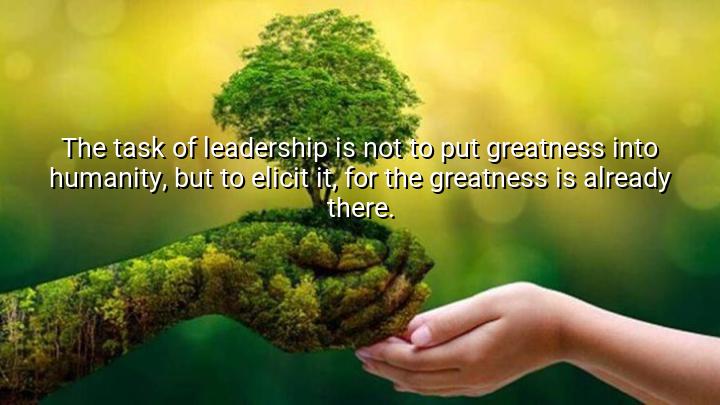




The quote by John Buchan emphasizes a humanistic view of leadership, suggesting that true leadership is about drawing out the inherent potential in people rather than imposing qualities from the outside. Buchan asserts that greatness already exists within individuals, and the role of a leader is to recognize, nurture, and encourage it. This perspective frames leadership as facilitative rather than directive, focusing on empowerment rather than control.
By stating that the task of leadership is to elicit greatness, Buchan underscores the importance of insight, empathy, and encouragement in guiding others. Leaders succeed not by dictating excellence, but by creating environments where people can discover and express their innate abilities. This approach fosters confidence, creativity, and collaboration among followers.
The quote also implies that leadership is relational. By eliciting greatness, a leader strengthens the collective capability of a group or organization. The focus is on unlocking potential, inspiring achievement, and cultivating personal growth, rather than attempting to manufacture skills or virtues externally.
Originating from John Buchan, a Scottish novelist, historian, and politician, the quote reflects his belief in the moral and ethical dimensions of leadership. Buchan’s philosophy emphasizes that effective leaders serve as catalysts for human potential, recognizing that the capacity for excellence resides within individuals and that their role is to draw it forth.

AAdministratorAdministrator
Welcome, honored guests. Please leave a comment, we will respond soon