

There is no despair so absolute as that which comes with the first moments of our first great sorrow, when we have not yet known what it is to have suffered and be healed, to have despaired and have recovered hope.
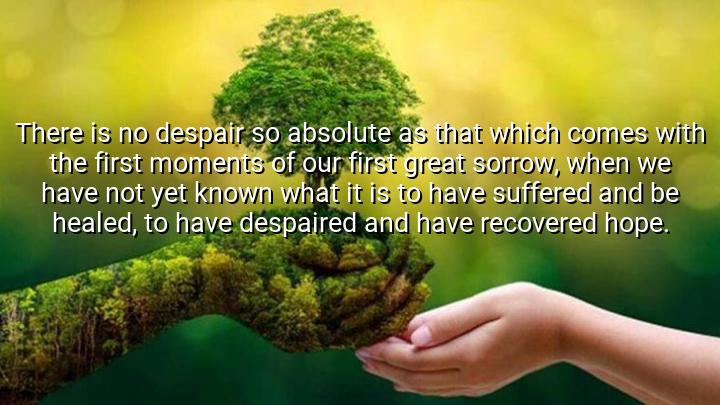




The quote "There is no despair so absolute as that which comes with the first moments of our first great sorrow, when we have not yet known what it is to have suffered and be healed, to have despaired and have recovered hope." by George Eliot speaks to the intensity of sorrow experienced when we face our first major loss or hardship. Eliot suggests that the despair we feel at the beginning of a significant emotional setback is often the most overwhelming, as we have not yet developed the resilience that comes from having suffered before. The pain is more acute because we haven't yet learned how to cope with grief or how hope can be restored after we’ve lost it.
The origin of the quote comes from Eliot’s understanding of human emotions and the process of healing. As a writer and thinker, Eliot often explored the depths of human suffering, as well as the ways people find meaning and recovery after hardship. This particular quote reflects her belief in the transformative nature of suffering, as she shows how time and experience help people heal. The idea is that with each sorrow we endure, we learn how to heal from it and recover a sense of hope.
Eliot emphasizes the notion that the first great sorrow is unique because it is unfamiliar and unbearable, often leaving us feeling like there is no escape from the pain. However, her words offer reassurance, indicating that healing and hope are possible through experience. Once we have gone through grief and come out the other side, we gain a deeper understanding of what it means to suffer and recover, which makes future sorrows more bearable.
Ultimately, this quote is about the transformative power of suffering. Eliot reminds us that despair feels all-consuming when we first experience it, but with time and the wisdom gained from living through sorrow, we learn to heal and regain hope. It suggests that while the first taste of pain is profound, it also paves the way for growth and resilience in the face of life's challenges.

AAdministratorAdministrator
Welcome, honored guests. Please leave a comment, we will respond soon