

There is a wisdom in this beyond the rules of physic: a man's own observation what he finds good of and what he finds hurt of is the best physic to preserve health.
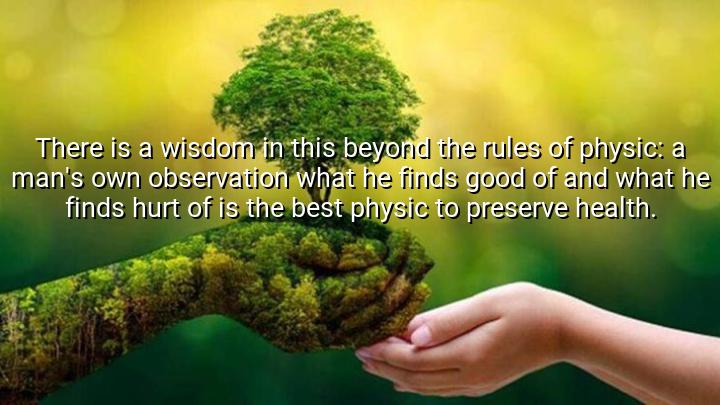




The quote by Francis Bacon, "There is a wisdom in this beyond the rules of physic: a man's own observation of what he finds good of and what he finds hurt of is the best physic to preserve health," emphasizes the importance of personal observation and self-awareness in maintaining one’s health. Bacon suggests that the best medicine, or physic, comes not just from external sources or scientific rules, but from an individual’s own experiences. By observing what enhances their well-being and what causes harm, a person can better understand how to preserve their health in a way that suits their body and life.
Bacon’s statement advocates for self-knowledge and intuition in making decisions related to health. Instead of relying solely on established medical knowledge or external prescriptions, he argues that individuals can use their own experiences to determine what is beneficial or harmful to them. This approach places value on personal insight, promoting a more holistic view of health where individuals actively participate in their own well-being.
The origin of this quote comes from Francis Bacon, a philosopher and scientist in the 16th and 17th centuries, often regarded as the father of the scientific method. Bacon's contributions to empirical and experimental science laid the foundation for modern scientific inquiry. However, in this quote, he emphasizes the value of subjective experience over rigid adherence to medical doctrines, advocating for a balance between reason and personal observation in matters of health.
Bacon’s words encourage individuals to trust their own perceptions and experiences in managing their health. While science and medicine are essential, the quote suggests that personal wisdom and awareness play a vital role in living a healthy life. It serves as a reminder that each person’s body responds differently to various practices, and understanding what works best for oneself is crucial for long-term health.

AAdministratorAdministrator
Welcome, honored guests. Please leave a comment, we will respond soon