

There is a vast quantity of religion current in the world which is not true, genuine Christianity. It passes muster, it satisfies sleepy consciences; but it is not good money. It is not the authentic reality that called itself Christianity in the beginning.
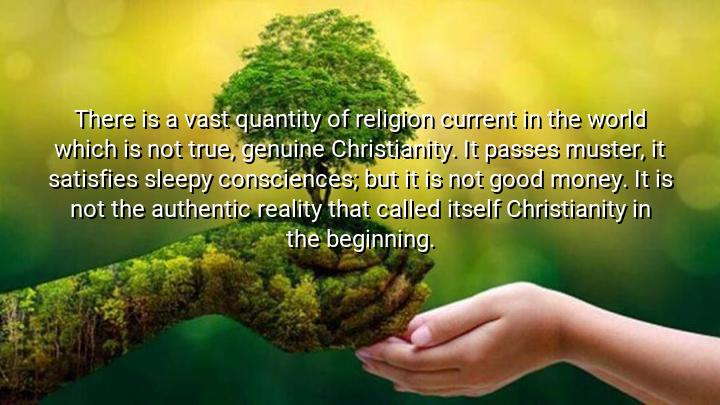




J. C. Ryle’s quote, "There is a vast quantity of religion current in the world which is not true, genuine Christianity," is a critique of what he sees as the superficial or inauthentic practices of religion in his time. Ryle is suggesting that much of what is practiced and accepted as Christianity today does not align with the core principles and teachings of early Christianity. The phrase "It passes muster, it satisfies sleepy consciences" implies that many people are content with a version of religion that is easy to follow and requires little deep reflection or commitment. This shallow form of belief allows individuals to feel morally secure without truly engaging with the spiritual or ethical demands of the faith.
The comparison of this type of religion to "not good money" highlights the falsehood or lack of substance in these practices. Just as counterfeit money might appear real but is ultimately worthless, Ryle argues that this inauthentic religion may look like Christianity but does not hold the true spiritual value. It is a cheap imitation, unable to provide the genuine spiritual nourishment and transformation that authentic Christianity offers.
Ryle’s perspective on Christianity emphasizes the importance of sincerity and depth in religious practice. He argues that real faith requires more than superficial observance or social conformity; it demands a genuine commitment to the teachings of Christ and an ongoing personal transformation. This emphasis on authenticity and integrity in one’s spiritual life is central to Ryle’s theology, which often focused on the need for a personal relationship with God, beyond the mere performance of religious rituals.
The origin of this quote lies in Ryle’s broader critique of religious complacency and his calls for a return to true Christianity. As a prominent 19th-century Evangelical bishop and theologian, Ryle was deeply concerned about the rise of what he considered lukewarm faith in the church. His writings sought to encourage a revitalization of the church by focusing on the genuine aspects of Christianity, calling people to examine their faith more critically and embrace a life-changing commitment to Christ. This quote is a reminder that religion should be a transformative force, not just a comforting tradition.

AAdministratorAdministrator
Welcome, honored guests. Please leave a comment, we will respond soon