

There is a history of thinking about space science from an environmental ethics perspective. And part of what I want to do is turn that back and use that experience to see if it reflects how we think about the Earth.
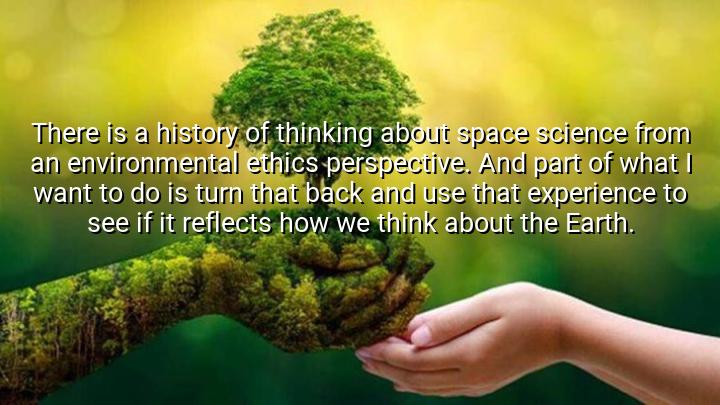




The quote by David Grinspoon explores the intersection of space science and environmental ethics, suggesting that studying other planets can inform how we approach environmental issues on Earth. Grinspoon highlights that there is a long-standing tradition of analyzing planetary systems through ethical and ecological lenses, which can provide valuable insights into sustainability, climate change, and human impact on our own planet.
By aiming to "turn that back," Grinspoon emphasizes the concept of comparative planetology, where lessons learned from other worlds are applied to better understand Earth’s environment. Observing how atmospheres, surfaces, and ecosystems evolve on different planets allows scientists to reflect on human responsibility and the consequences of environmental mismanagement. This approach merges scientific inquiry with ethical reflection, fostering a deeper awareness of our role in planetary stewardship.
The origin of this perspective is rooted in Grinspoon’s work in astrobiology, planetary science, and environmental studies. By combining these fields, he examines not only the physical processes that shape planets but also the moral and philosophical implications of human interactions with our environment. His research encourages thinking about Earth in a broader cosmic context, where lessons from space exploration inform sustainable practices on our home planet.
Ultimately, the quote advocates for a reflective and ethical approach to environmental science. Grinspoon suggests that understanding other planets’ vulnerabilities and resilience can enhance our ability to protect Earth, emphasizing that space science is not only about exploration but also about guiding responsible and informed decisions for a sustainable future.

AAdministratorAdministrator
Welcome, honored guests. Please leave a comment, we will respond soon