

The world's biggest power is the youth and beauty of a woman.
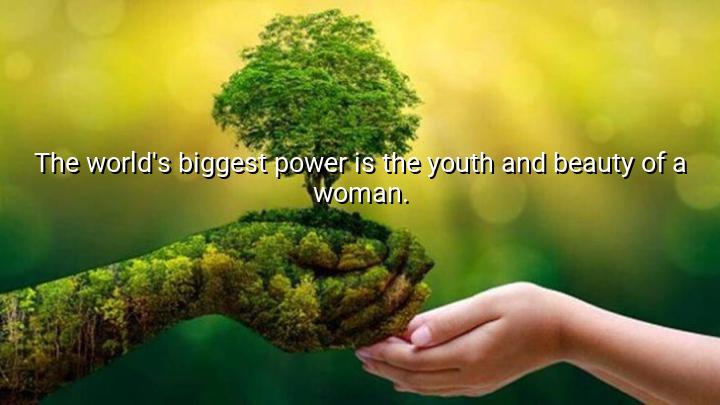




The quote “The world's biggest power is the youth and beauty of a woman” by Chanakya reflects a perspective from ancient Indian philosophy, highlighting the profound influence that youth and beauty can have in societal dynamics. Chanakya suggests that these qualities possess a unique kind of power—not necessarily physical or political, but one that can influence emotions, decisions, and relationships across all levels of society. In many historical and cultural contexts, such attributes have been seen as having the ability to command attention, shape behavior, and even alter outcomes.
Chanakya, also known as Kautilya or Vishnugupta, was a renowned teacher, philosopher, economist, and advisor in ancient India, best known for his work Arthashastra, a treatise on statecraft and governance. His writings often blended realpolitik with keen psychological insight into human nature. This quote is reflective of his pragmatic and sometimes cynical worldview, where he analyzed the tools of influence—including charisma, appearance, and timing—as essential elements of power and persuasion.
The mention of “youth and beauty of a woman” points to qualities historically admired and even romanticized in many societies, but Chanakya’s framing makes it more strategic than sentimental. He views these attributes not as mere vanity, but as resources that can yield significant influence when recognized and utilized, especially in interpersonal or political contexts. In this way, he acknowledges a form of soft power—a subtle yet potent force that shapes outcomes through attraction rather than coercion.
However, while the quote acknowledges this power, it also reflects a historical viewpoint that may not align with modern ideas of gender equality and individual worth beyond appearance. Today, many would argue that a woman’s intellect, integrity, and contributions far surpass the fleeting nature of youth or physical beauty. Still, Chanakya’s statement remains a window into the way influence was understood in ancient governance and diplomacy, offering both cultural insight and a chance for critical reflection.

AAdministratorAdministrator
Welcome, honored guests. Please leave a comment, we will respond soon