

The happiness and peace attained by those satisfied by the nectar of spiritual tranquillity is not attained by greedy persons restlessly moving here and there.
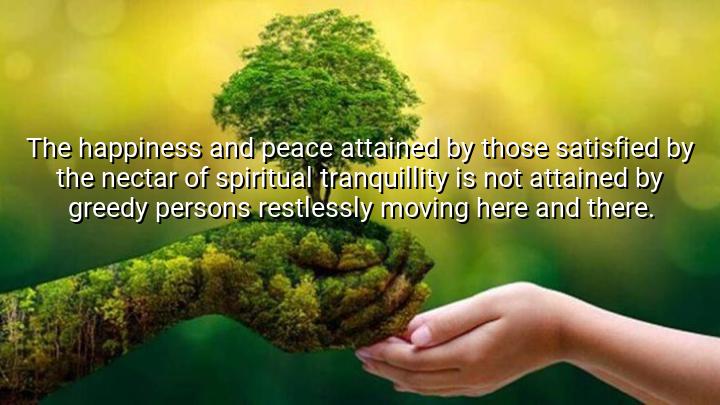




Chanakya’s quote, "The happiness and peace attained by those satisfied by the nectar of spiritual tranquillity is not attained by greedy persons restlessly moving here and there," highlights the contrast between material desire and spiritual fulfillment. Chanakya suggests that true happiness and peace are achieved not through the relentless pursuit of wealth or material success but by cultivating inner calm and contentment through spiritual practice. The metaphor of the nectar of spiritual tranquillity illustrates the sweetness and richness that comes from spiritual satisfaction, which is far more enduring than the fleeting pleasures of material gain.
The reference to greedy persons indicates that those who are constantly seeking more—whether it be money, status, or possessions—will never find true peace. This constant striving and restlessness prevent them from experiencing the profound contentment that comes from inner peace. Chanakya points out that no matter how much material wealth they accumulate, they will remain unsatisfied, as they are chasing external rewards rather than focusing on internal growth.
Chanakya’s teachings often emphasize the importance of self-control, discipline, and the pursuit of higher ideals rather than material desires. This quote reflects his belief that true contentment is found in simplicity and spiritual focus, rather than in the accumulation of external possessions. By drawing a distinction between the greedy and those who seek spiritual tranquillity, he underscores the idea that inner peace is the real source of long-lasting happiness.
The origin of this quote lies in Chanakya's philosophical and political writings, particularly his work in the Arthashastra, a treatise on governance, economics, and ethics. Known for his wisdom and strategic thinking, Chanakya was a prominent advisor in ancient India. His views on contentment and the pursuit of inner peace were central to his teachings on leadership and personal development, and his philosophy remains influential in modern discussions of spirituality and self-improvement.

AAdministratorAdministrator
Welcome, honored guests. Please leave a comment, we will respond soon