

The world has been experiencing a whole pattern of auto-destruction, whether in environmental disasters like Chernobyl or health disasters like AIDS.
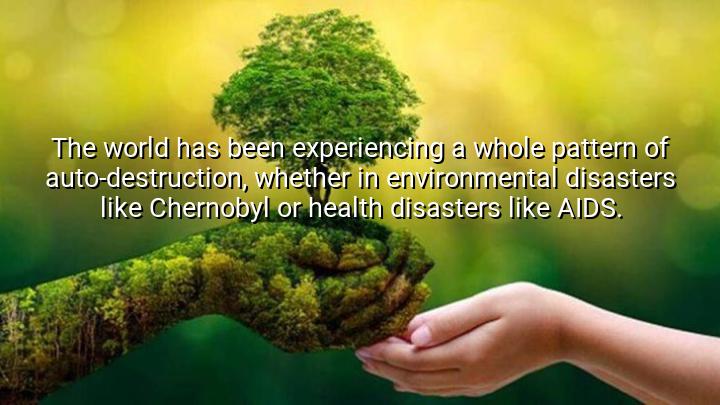




The quote by Niki de St. Phalle emphasizes the recurring pattern of self-destruction that humanity faces in both environmental and health crises. By stating, "The world has been experiencing a whole pattern of auto-destruction, whether in environmental disasters like Chernobyl or health disasters like AIDS," she highlights how human actions—or failures to act responsibly—can lead to large-scale consequences that affect society and the planet.
The meaning of this quote centers on the interconnectedness of human decisions and their far-reaching impacts. De St. Phalle suggests that disasters, whether caused by technological failures or public health challenges, are symptoms of a broader trend in which humanity often acts in ways that undermine its own safety and well-being. The quote serves as a cautionary reflection on the need for foresight, responsibility, and preventive action.
In terms of origin, this quote comes from Niki de St. Phalle, a French-American artist and activist known for her provocative works that often addressed social, political, and environmental issues. De St. Phalle used her art and public statements to raise awareness about the consequences of human negligence and the urgent need for change, making her commentary both personal and universally relevant.
Ultimately, the quote underscores the importance of responsibility and awareness in addressing global challenges. By pointing to Chernobyl and AIDS as examples of auto-destruction, de St. Phalle reminds us that ignoring environmental and health risks can have catastrophic consequences. Her statement encourages proactive measures and ethical decision-making to prevent further harm to both humanity and the planet.

AAdministratorAdministrator
Welcome, honored guests. Please leave a comment, we will respond soon