

The wicked leader is he who the people despise. The good leader is he who the people revere. The great leader is he who the people say, 'We did it ourselves.'
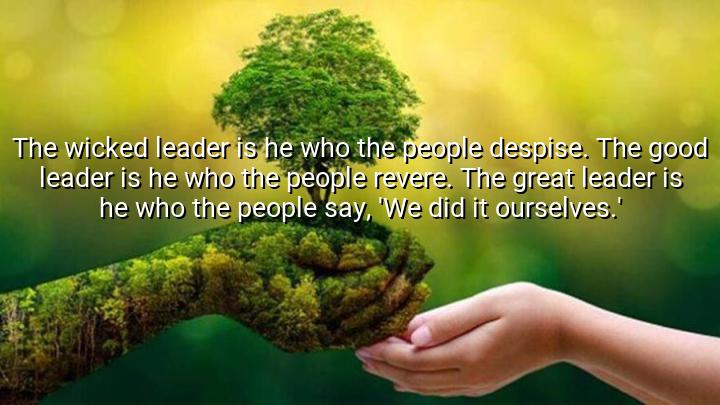




The quote "The wicked leader is he who the people despise. The good leader is he who the people revere. The great leader is he who the people say, 'We did it ourselves.'" by Lao Tzu explores different types of leadership and their impact on the people they lead. Lao Tzu suggests that a wicked leader is one who imposes their will on the people, leading to resentment and despise. A good leader, on the other hand, earns the respect and reverence of the people through their actions, but still maintains a certain level of authority and influence.
Lao Tzu’s concept of the great leader is the highest form of leadership, one that does not seek recognition or power for themselves. Instead, a great leader empowers the people, fostering an environment where they feel capable and confident enough to take ownership of their achievements. The great leader’s success is measured by the people’s belief that their accomplishments were the result of their own efforts, not the leader’s actions alone. This type of leadership reflects humility and selflessness, where the leader’s primary goal is the empowerment of others.
The origin of this quote lies in the teachings of Lao Tzu, an ancient Chinese philosopher and the author of the Tao Te Ching. Lao Tzu is known for his ideas on leadership and governance, which emphasize naturalness, humility, and the importance of the leader’s role in guiding rather than controlling. His philosophy centers around the idea of wu wei, or effortless action, where the leader helps shape events and the people’s actions without forcing them.
Ultimately, Lao Tzu’s quote encourages a view of leadership that focuses on the collective rather than the individual. It reminds leaders that true greatness lies not in commanding admiration or loyalty, but in helping people realize their own potential and ability to act independently. The great leader is one who can step back and allow the people to thrive, knowing that their success is a reflection of their own efforts, not the leader’s.

AAdministratorAdministrator
Welcome, honored guests. Please leave a comment, we will respond soon