

The very elements of what constitutes good nursing are as little understood for the well as for the sick. The same laws of health or of nursing, for they are in reality the same, obtain among the well as among the sick.
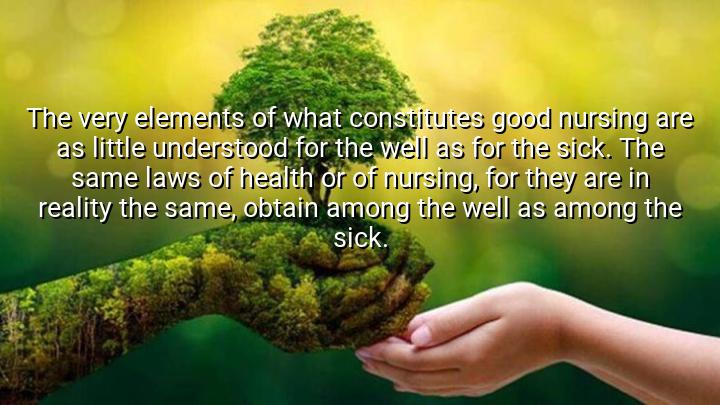




Florence Nightingale’s quote reflects her belief that the principles of good nursing and health are not just relevant for the sick, but for the well as well. She suggests that the laws of health and the practices that constitute good nursing should apply universally, regardless of whether someone is ill or healthy. Nightingale points out that the same care and principles that promote healing in the sick can also maintain well-being in the healthy, emphasizing that the fundamentals of nursing and health are universal.
Nightingale is also drawing attention to the broader misunderstanding of nursing as a profession. She highlights that society often views nursing solely as something needed for sick patients, whereas, in reality, the core principles of nursing—such as cleanliness, prevention, and overall well-being—are vital for everyone. This insight advocates for a more holistic understanding of nursing that spans across all levels of health care, not just illness recovery.
The quote also speaks to Nightingale's pioneering ideas about public health and preventive care, which were revolutionary during her time. She saw the environmental and social conditions as integral to both health and nursing, with the belief that creating a healthy environment was key to preventing illness in the first place. Her work went beyond just treating the sick to advocating for changes in sanitation, hygiene, and healthcare systems that could benefit the population at large.
Originating from Nightingale’s work as a nurse and health reformer, the quote embodies her vision of nursing as a proactive, preventive, and holistic practice. Her contributions to modern nursing and public health have had a lasting impact, and this quote encapsulates her belief that health care and nursing are integral to the well-being of all individuals, not just the ill.

AAdministratorAdministrator
Welcome, honored guests. Please leave a comment, we will respond soon