

The utmost extent of man's knowledge, is to know that he knows nothing.
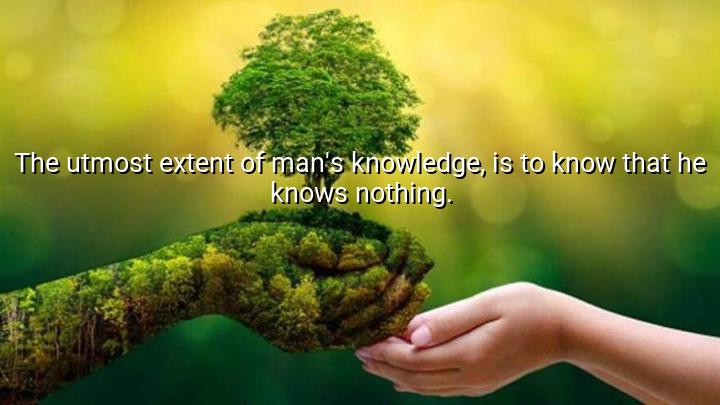




The quote by Joseph Addison emphasizes the limits of human knowledge and the importance of intellectual humility. By stating that “the utmost extent of man’s knowledge is to know that he knows nothing,” Addison highlights the idea that true wisdom begins with the recognition of one’s own ignorance. This perspective encourages individuals to remain open-minded, curious, and cautious about claiming certainty in complex matters.
Addison’s statement is rooted in philosophical thought, particularly echoing Socratic wisdom, which similarly values the awareness of one’s limitations in understanding. The quote suggests that human beings can pursue knowledge and learning, but must acknowledge that no matter how much they know, there is always more beyond their grasp. This fosters a sense of humility and continual intellectual exploration.
The quote also serves as a critique of arrogance and overconfidence in one’s own understanding. Addison implies that assuming complete knowledge can lead to misjudgment and narrow thinking, whereas acknowledging uncertainty opens the door to growth, critical thinking, and deeper insight.
Originating from Addison’s essays in the early 18th century, the quote reflects the Enlightenment era’s focus on reason, education, and self-reflection. It continues to resonate today as a reminder that wisdom is not about knowing everything, but about understanding the boundaries of one’s knowledge and remaining receptive to learning throughout life.

AAdministratorAdministrator
Welcome, honored guests. Please leave a comment, we will respond soon