

The trains carrying coal to power plants are death trains. Coal-fired power plants are factories of death.
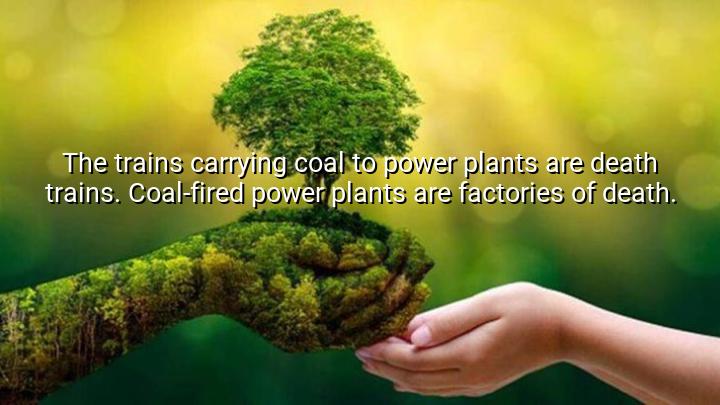




In this quote, James Hansen, a leading climate scientist and advocate for climate action, sharply criticizes the use of coal as a source of energy. By referring to the trains carrying coal to power plants as "death trains" and coal-fired power plants as "factories of death", Hansen highlights the environmental and public health dangers associated with coal use. His language is intentionally dramatic, drawing attention to the harmful effects of coal mining, transportation, and combustion, which contribute to air pollution, global warming, and the destruction of ecosystems.
Hansen’s words reflect his concern about the climate crisis and the role that fossil fuels, particularly coal, play in exacerbating it. Coal-fired power plants are major sources of carbon emissions, which contribute to climate change by releasing large amounts of carbon dioxide into the atmosphere. Beyond its contribution to global warming, the burning of coal also produces harmful particulate matter and toxins that can cause serious health problems, such as respiratory diseases and cancer, thus framing the industry as a threat to both human life and the environment.
The use of the terms "death trains" and "factories of death" underscores Hansen’s urgency in addressing the destructive impact of coal. His statement suggests that coal's environmental and health risks are so significant that it is morally imperative to shift away from it in favor of cleaner, more sustainable energy sources. This also serves as a critique of governments and corporations that continue to rely on coal, despite its known harms, and a call for more aggressive action to mitigate climate change.
Ultimately, James Hansen’s quote serves as a stark condemnation of the coal industry and its contribution to the climate crisis and public health issues. It emphasizes the need to transition to renewable energy sources that do not have the same devastating impact on human life and the planet. By using such powerful imagery, Hansen seeks to raise awareness and inspire action against one of the most harmful sources of energy in the world today.

AAdministratorAdministrator
Welcome, honored guests. Please leave a comment, we will respond soon