

The stroke of death is as a lover's pinch, which hurts and is desired.
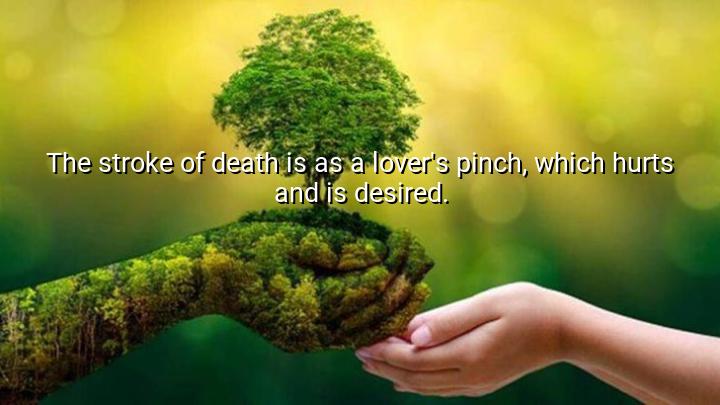




William Shakespeare's quote, "The stroke of death is as a lover's pinch, which hurts and is desired," reflects his complex view of death as both a painful and inevitable part of life, while also hinting at a sense of acceptance or even yearning for it. The comparison to a lover's pinch suggests that, while death causes suffering, it is also something that individuals may feel a strange attraction to, as it represents the end of pain or struggle. This duality captures the human paradox of fearing death yet also longing for its release from life's burdens.
Shakespeare often explored the theme of mortality in his plays, recognizing the inevitability of death while examining the emotional complexity that surrounds it. In this quote, he suggests that death, like the gentle yet hurtful pinch of a lover, is something that we both dread and desire—a natural part of the human experience that we cannot escape, yet sometimes wish for when life becomes too difficult. The metaphor of a lover's pinch indicates that death, while painful, may also be seen as a release or liberation, much like how a lover’s actions may bring both pleasure and pain.
The idea of death being both hurtful and desired can be understood in the context of Shakespeare’s tragic characters who often face internal conflict between the fear of death and the relief it may bring. In works like "Hamlet" and "Macbeth", death is portrayed as something both feared and sought after—an escape from the turmoil of the world. Shakespeare’s characters often grapple with the complexity of life and death, and this quote encapsulates the tension between desiring the end of suffering while still fearing what that end represents.
The origin of this quote is from Shakespeare's "The Rape of Lucrece", where he explores themes of suffering, desire, and death through his narrative poetry. By likening death to a lover's touch, Shakespeare provides a poetic way of understanding the human condition, where death is both a painful event and a potential release from the difficulties of life. This quote reflects his broader exploration of human emotions, particularly the contradictory feelings that arise when contemplating mortality.

AAdministratorAdministrator
Welcome, honored guests. Please leave a comment, we will respond soon