

The Son of God became man so that we might become God.
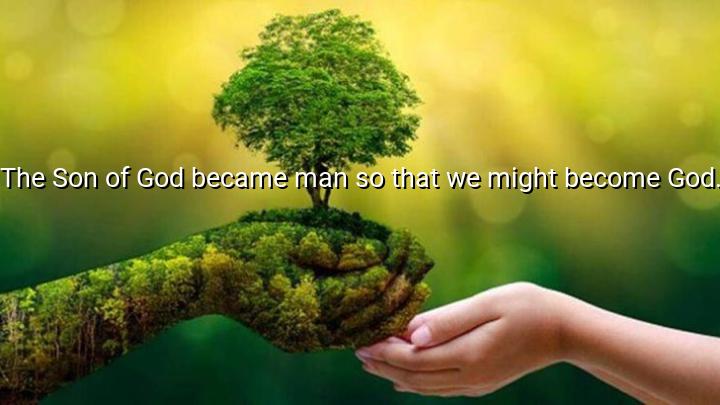




The quote "The Son of God became man so that we might become God" by Athanasius speaks to the Christian concept of divinization or theosis, which is the idea that humanity can be transformed to share in the divine nature through Christ. Athanasius, a 4th-century theologian and key figure in early Christianity, is articulating the belief that by taking on human form, the Son of God (Jesus Christ) made it possible for humans to be elevated spiritually and participate in the divine life. Through the incarnation of Christ, God became fully human in order to bridge the gap between the divine and the human, offering humans the opportunity to be restored to their original state, which was meant to be in communion with God.
In this context, the quote emphasizes the purpose of Christ’s incarnation—not merely to save humanity from sin but to elevate it, enabling people to become partakers of the divine nature. Athanasius believed that by becoming man, Christ sanctified humanity and provided a way for human beings to be transformed, not just morally but ontologically, becoming one with God in a spiritual sense. The idea is that Christ’s divinity and humanity are not in opposition but work together to bring about the salvation and ultimate transformation of mankind.
Athanasius' statement is deeply rooted in the doctrines of the early Church, particularly the belief in the unity of Christ’s divine and human natures. His theological work, especially in the context of the Nicene Creed, sought to define and protect the orthodox Christian understanding of the nature of Christ against various heresies, such as Arianism, which questioned the full divinity of Christ. For Athanasius, the incarnation was not just a means of salvation from sin but also a profound mystery that made it possible for humans to be fully united with God, becoming partakers of God's nature through Christ.
Ultimately, this quote reflects a foundational idea in Christian theology: that Christ’s coming into the world as both God and man was meant to enable humanity to be restored, not only forgiven but transformed. This theological vision stresses the hope that through Christ, human beings are invited to participate in the divine life, achieving union with God and being made part of the divine family. It underscores the profound mystery of the incarnation and highlights the ultimate goal of Christianity—to become like Christ and, through Him, share in the divine nature.

AAdministratorAdministrator
Welcome, honored guests. Please leave a comment, we will respond soon