

The question that we must ask is whether we are making progress toward the goal of universal peace. Or are we caught up on a treadmill of history, turning forever on the axle of mindless aggression and self-destruction?
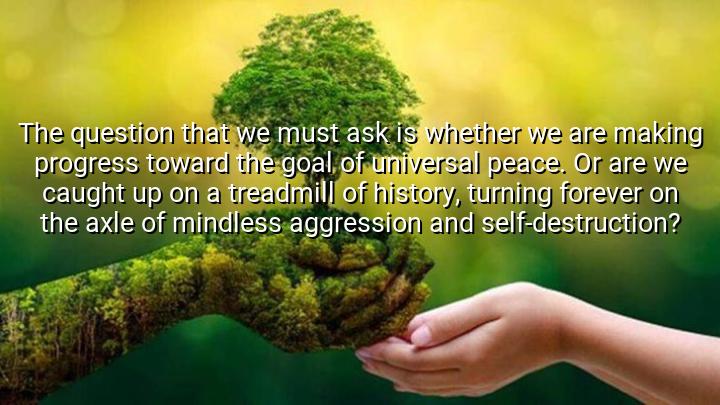




In this quote, F. W. de Klerk challenges the world to reflect on the direction of human progress, particularly in relation to the goal of universal peace. He poses the question of whether humanity is truly moving toward a more peaceful and harmonious future or if it is instead trapped in an endless cycle of mindless aggression and self-destruction. De Klerk is urging society to critically examine its actions and motivations, especially in terms of how conflicts and violence continue to shape the course of history.
The metaphor of a treadmill of history suggests that instead of advancing toward peace, the world may be stuck in a repetitive cycle, where aggression and destruction are continuously perpetuated. The axle in this metaphor represents the driving force behind this cycle, which de Klerk describes as mindless, indicating that such actions are not guided by reason or thoughtful strategy but by impulsive, destructive tendencies. He warns that humanity risks being locked in this pattern without making genuine progress toward a more peaceful existence.
De Klerk's quote also reflects a deep concern about the trajectory of global events, particularly in the context of his own experiences during his leadership in South Africa. As the president who oversaw the peaceful end of apartheid and helped steer the country toward reconciliation, he understood firsthand the power of diplomacy, compromise, and the importance of fostering peace. His call for reflection on the global situation is a reminder that progress requires conscious effort and the will to break free from destructive cycles.
The origin of this quote is rooted in de Klerk’s leadership role during a pivotal moment in history. Having played a critical part in dismantling apartheid, he believed in the possibility of transformation through negotiation and reconciliation. This quote reflects his broader commitment to peace and his concern about the state of the world as it continues to grapple with conflict and violence. It challenges people to rethink their priorities and work more intentionally toward lasting peace.

AAdministratorAdministrator
Welcome, honored guests. Please leave a comment, we will respond soon