

The problem with the stigma around mental health is really about the stories that we tell ourselves as a society. What is normal? That's just a story that we tell ourselves.
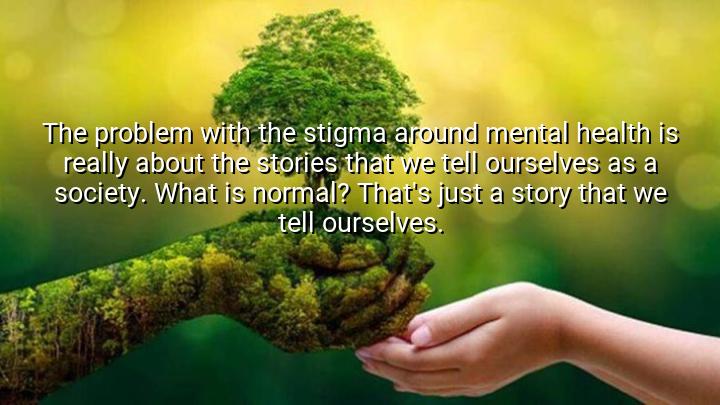




In this quote, Matthew Quick addresses the societal stigma surrounding mental health, emphasizing that much of it stems from the stories and narratives we create as a society. He argues that the concept of normalcy is not an objective truth, but rather a construct—a story we tell ourselves to define what is acceptable or expected in our behaviors and experiences. Quick is suggesting that if we change the narrative around mental health, we can reduce the stigma and create a more accepting and compassionate society.
Quick’s statement challenges the traditional understanding of what it means to be normal and highlights how societal expectations often lead to the marginalization of those with mental health struggles. By calling normal a “story,” he is pointing out that what society deems acceptable is shaped by cultural beliefs and historical contexts, not by universal truths. This perspective encourages a more flexible, open-minded approach to mental health, one that recognizes the diversity of human experiences without labeling them as abnormal or problematic.
The origin of this quote comes from Matthew Quick, an author known for his novels that explore themes of mental health, identity, and society’s perceptions. His most famous work, The Silver Linings Playbook, deals directly with mental illness and its impact on personal and social relationships. Through his writing and public statements, Quick has become an advocate for understanding mental health in a more nuanced and less stigmatizing way.
Ultimately, Quick’s quote encourages a shift in how we view mental health by dismantling the rigid definitions of normal and embracing the complexity of human experiences. By acknowledging that society’s stories about what is normal can be flawed, he advocates for greater understanding and acceptance of mental health challenges, promoting a more inclusive and compassionate worldview.

AAdministratorAdministrator
Welcome, honored guests. Please leave a comment, we will respond soon