

The optimist thinks this is the best of all possible worlds. The pessimist fears it is true.
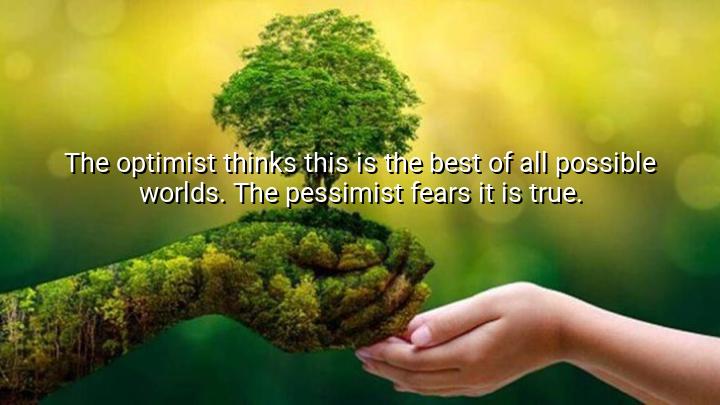




The quote by J. Robert Oppenheimer contrasts the perspectives of the optimist and the pessimist regarding the nature of the world we live in. The optimist believes that this world, with all its flaws and complexities, is actually the best possible version—implying hope, acceptance, and a positive outlook on life and humanity. On the other hand, the pessimist is troubled by this same idea, fearing that despite its imperfections, this world is indeed as good as it gets, which evokes a sense of despair or resignation.
Oppenheimer’s words capture the tension between hope and fear, showing how the same reality can be interpreted very differently depending on one’s mindset. The optimist finds comfort and possibility in the present world, while the pessimist is overwhelmed by the shortcomings they perceive, worried that improvement or change might be impossible.
The origin of this quote comes from J. Robert Oppenheimer, a physicist known as the "father of the atomic bomb," who witnessed firsthand the profound consequences of human actions during a pivotal moment in history. His reflection here can be seen as an expression of the ambivalence and complexity involved in grappling with the moral and existential questions raised by scientific and technological advances.
In essence, the quote invites us to consider how our outlook shapes our understanding of reality. It challenges us to reflect on whether we choose to see the world as full of potential or as a fixed state of imperfection, highlighting the power of perspective in shaping our experience of life.

AAdministratorAdministrator
Welcome, honored guests. Please leave a comment, we will respond soon