

The mere acknowledgment that 'God is watching' can act as a trap, fueling bad behavior, corruption, and guilt, all remedied by God's forgiveness. No personal responsibility is needed - someone on the outside sees whatever we're doing and makes it all OK.
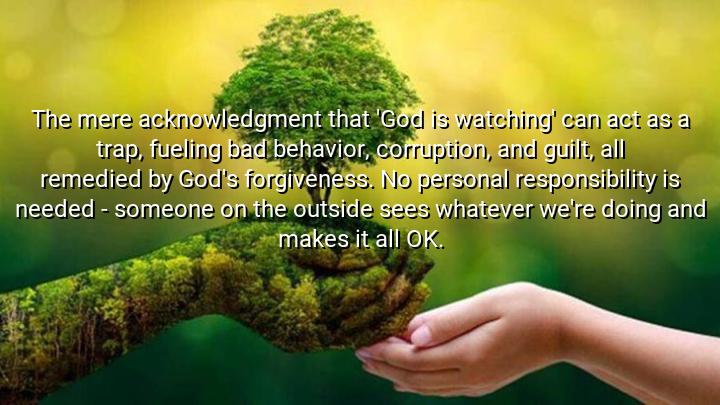




In this quote, Tara Stiles, a yoga instructor and wellness advocate, critiques the idea of using the belief that "God is watching" as a justification for bad behavior. She suggests that this concept can become a trap, where individuals feel that their actions are overseen by a higher power, thus absolving them of personal responsibility. Stiles argues that this belief can fuel negative behaviors like corruption and guilt, as people may feel they can act however they want with the expectation that God's forgiveness will make everything "OK."
Stiles points out that if people rely on the idea that someone on the outside (in this case, God) is constantly observing them, it can create a false sense of security. This reliance on external validation or absolution can prevent individuals from taking personal responsibility for their actions. Instead of looking inward and striving to do better, people may simply wait for forgiveness, avoiding the deeper work of self-reflection and accountability.
The quote reflects a concern with how external forces, like religious or moral authority, can sometimes be misused to avoid confronting one's own shortcomings. Stiles emphasizes that personal responsibility is a crucial aspect of growth and ethical behavior, and that simply relying on forgiveness can prevent individuals from learning from their mistakes. By focusing on external validation rather than internal growth, people may avoid confronting the root causes of their behavior.
Ultimately, Tara Stiles' quote challenges the idea of forgiveness as an excuse for avoiding responsibility. It suggests that real growth comes from acknowledging one's actions and taking ownership of them, rather than relying on the belief that an external power will always make things right. Her perspective advocates for a more empowered approach to morality, where personal responsibility and self-awareness are central to meaningful change.

AAdministratorAdministrator
Welcome, honored guests. Please leave a comment, we will respond soon