

The happiness of a man in this life does not consist in the absence but in the mastery of his passions.
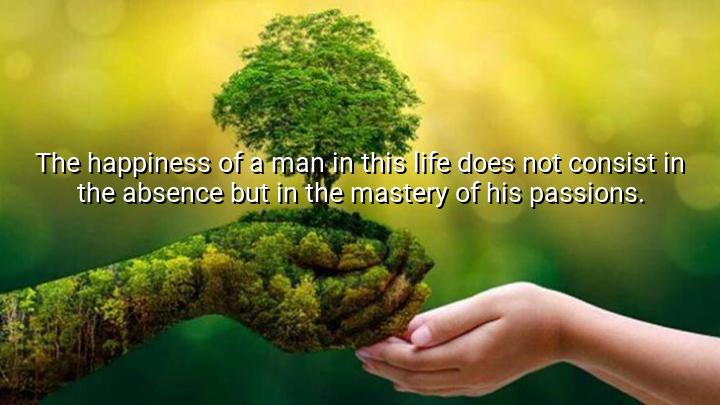




In this quote, Alfred Lord Tennyson suggests that true happiness does not come from suppressing or avoiding one’s passions, but from learning to master them. Tennyson implies that human desires and emotions are an integral part of life, but their power over us must be controlled. Happiness, therefore, is not about the absence of passions—such as ambition, love, or anger—but about how we manage and direct them in a way that benefits our well-being.
Tennyson’s perspective challenges the idea that self-restraint or detachment is the key to happiness. Instead, he advocates for a more balanced approach, where one learns to understand and control their emotions and desires, rather than allowing them to control them. The mastery of passions is about having self-discipline, knowing when to act on these feelings, and when to hold them back, creating a sense of inner peace and equilibrium.
The quote also highlights the importance of emotional intelligence and self-awareness in achieving lasting happiness. Instead of being dominated by emotions or driven solely by passions, a person who has mastered them can live more harmoniously, making decisions based on reason and understanding rather than impulse. This balance between emotion and reason is what allows individuals to navigate life with greater clarity and contentment.
Ultimately, Tennyson’s words remind us that happiness is not about escaping or ignoring the complexities of human emotion, but about developing the wisdom and strength to harness and direct those emotions in a way that contributes to a fulfilling and purposeful life. Mastering our passions leads to self-control, personal growth, and a deeper, more meaningful form of happiness.

AAdministratorAdministrator
Welcome, honored guests. Please leave a comment, we will respond soon