

Dreams are true while they last, and do we not live in dreams?
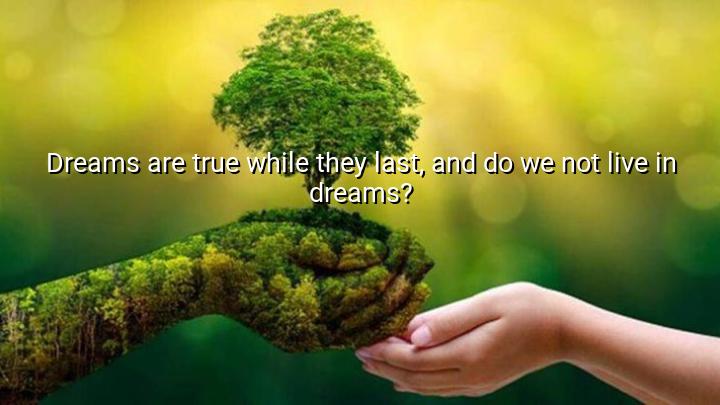




The quote "Dreams are true while they last, and do we not live in dreams?" by Alfred Lord Tennyson reflects on the transitory nature of dreams and their significance in our lives. Tennyson suggests that while dreams may not last forever, they hold truth and meaning during the time they exist. This implies that dreams, whether literal or metaphorical, provide us with valuable insights and are a reflection of our innermost desires, hopes, and emotions. While dreams may be fleeting, they are genuine in the moment, offering us clarity and understanding that can shape our experiences.
The second part of the quote, "do we not live in dreams?", challenges the idea that the waking world is entirely separate from the world of dreams. Tennyson seems to suggest that much of human existence is guided by the same forces that drive our dreams: imagination, aspiration, and the pursuit of something beyond the ordinary. In a sense, we are all living out our own dreams, whether in our personal ambitions or in the way we see and interpret the world around us.
The origin of the quote comes from Alfred Lord Tennyson, a celebrated English poet known for his exploration of human emotion, nature, and existential themes. Tennyson's work often delved into the complexities of the human psyche and the blurred lines between reality and imagination. This quote exemplifies his fascination with how the boundaries between dreams and waking life can be both real and illusory.
Ultimately, Tennyson’s quote invites us to reflect on the role of dreams in shaping our lives. It suggests that even though our dreams may not last forever, they hold meaning in the present and play a significant role in how we navigate our waking reality. The quote encourages a deeper understanding of dreams as more than just fleeting thoughts, seeing them as integral to the human experience.

AAdministratorAdministrator
Welcome, honored guests. Please leave a comment, we will respond soon