

The good physician treats the disease; the great physician treats the patient who has the disease.
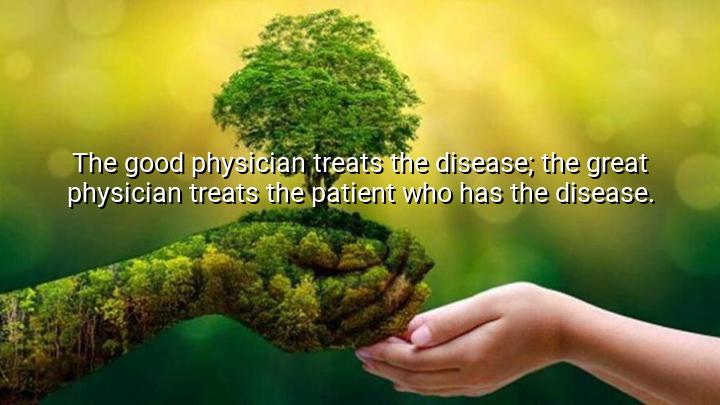




The quote "The good physician treats the disease; the great physician treats the patient who has the disease" by William Osler, a pioneering figure in modern medicine, emphasizes the difference between simply addressing a medical condition and providing holistic care. Osler is highlighting that while a competent doctor can focus on treating the disease itself, a truly great physician takes into account the whole person—their emotional, mental, and social well-being—beyond just the physical symptoms.
Osler’s statement reflects his belief in the importance of patient-centered care, which emphasizes treating the individual as a whole. A great physician, according to Osler, understands that medical conditions are often intertwined with the patient's life circumstances, personality, and psychological state. Therefore, treating the patient involves more than just prescribing medication or performing procedures; it involves a deeper understanding of their overall health and personal needs.
The origin of this quote comes from Osler's approach to medicine as a science and an art. As a physician, Osler was known for his compassionate bedside manner and his focus on developing a strong relationship with his patients. He believed in the power of empathy and communication, which helped lay the foundation for modern medical practice. This quote reflects his vision of medicine as not just a technical field, but one that requires genuine human connection.
Ultimately, Osler’s quote serves as a reminder of the profound impact a physician’s approach can have on a patient's overall experience with healthcare. It stresses the importance of compassion, empathy, and understanding, elements that distinguish great healthcare providers from simply competent ones. This holistic view of care continues to resonate in the medical field today, promoting a more integrative approach to patient health.

AAdministratorAdministrator
Welcome, honored guests. Please leave a comment, we will respond soon