

It is much more important to know what sort of a patient has a disease than what sort of a disease a patient has.
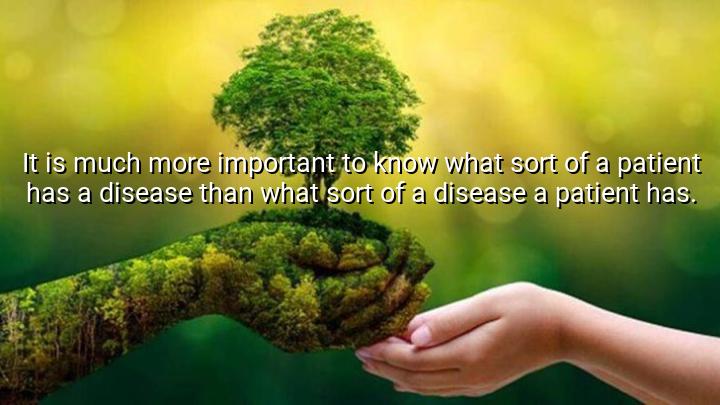




William Osler’s quote, “It is much more important to know what sort of a patient has a disease than what sort of a disease a patient has,” highlights the importance of considering the individual as a whole when diagnosing and treating illness, rather than focusing solely on the disease itself. Osler, one of the founding figures of modern medicine, emphasizes that understanding the patient’s unique physical, mental, and emotional context is crucial to effective care. This approach encourages personalized medicine, where the treatment plan is tailored to the specific needs and circumstances of the individual, rather than simply categorizing them by the disease they have.
The origin of the quote comes from Osler’s pioneering work in clinical medicine and his belief in the holistic approach to patient care. As a physician, Osler was known for his deep compassion for patients and his focus on the human aspect of medicine, rather than just the technical details of a diagnosis. He understood that each patient brings their own set of life experiences, habits, and emotional responses to their illness, which can affect how they respond to treatment. This insight laid the groundwork for the development of patient-centered care in the healthcare field.
Osler’s statement also speaks to the complexity of treating human beings, as opposed to merely addressing symptoms or diseases. It suggests that doctors should be keenly aware of the personality, background, and overall health of the patient, which can greatly influence their recovery. The “what sort of a patient” refers to the importance of understanding the psychological and social factors that contribute to the patient’s condition and healing process, not just the biological aspects of the disease.
Ultimately, Osler’s quote underscores the importance of treating patients as individuals, rather than reducing them to a set of medical symptoms. By focusing on the patient rather than the disease, healthcare professionals can provide more effective, compassionate, and holistic care, fostering a stronger doctor-patient relationship and improving outcomes. It’s a reminder that medicine is not just about diagnosing and curing, but about understanding the person as a whole.

AAdministratorAdministrator
Welcome, honored guests. Please leave a comment, we will respond soon