

The fearful unbelief is unbelief in yourself.
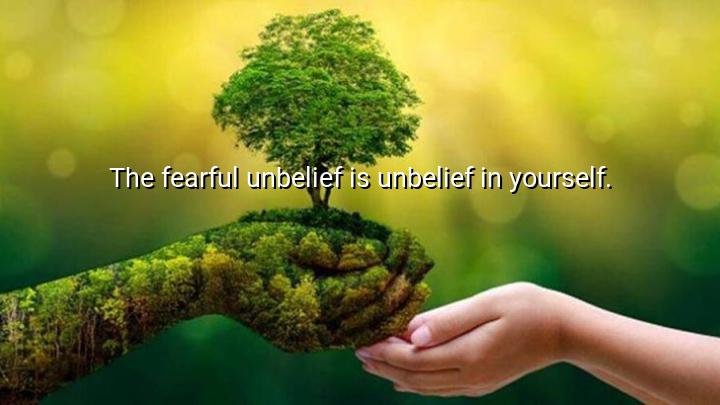




The quote “The fearful unbelief is unbelief in yourself” is attributed to Thomas Carlyle, a 19th-century Scottish essayist, historian, and philosopher known for his commentary on heroism, individual strength, and moral conviction. Carlyle frequently emphasized the importance of self-reliance and inner courage, and this quote captures his belief that the most paralyzing kind of doubt is not about the external world—but about one’s own worth and capability.
At its core, the quote warns against the deep and often unspoken fear of inadequacy. Carlyle calls this a more dangerous form of unbelief, one that doesn’t reject external truths or ideologies but rather doubts one’s inner strength, potential, and purpose. According to Carlyle, this lack of self-trust becomes a major obstacle to achieving anything meaningful, leading to inaction, self-defeat, and emotional paralysis.
This idea aligns with Carlyle’s broader philosophical outlook, which often celebrated the power of the individual will and the necessity of acting with conviction. He believed that those who lack belief in themselves are less likely to rise to challenges, pursue greatness, or make a difference. In his view, courage, faith in one’s abilities, and moral determination are essential to leading a fulfilled and impactful life.
Ultimately, Carlyle’s message is one of empowerment: to overcome fear, one must begin by rebuilding confidence in the self. Rather than being trapped by inner doubts, individuals are called to embrace their dignity, intelligence, and strength of character. This quote remains a timeless reminder that many of our limitations are self-imposed, and that belief in oneself is the foundation of personal transformation.

AAdministratorAdministrator
Welcome, honored guests. Please leave a comment, we will respond soon