

The faking of feelings is a sin against the imagination.
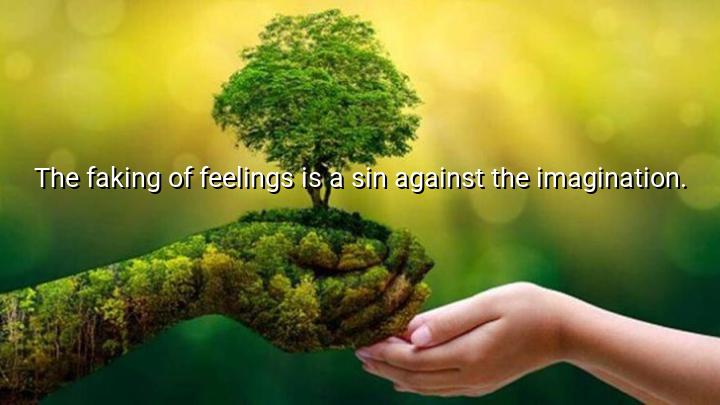




The quote "The faking of feelings is a sin against the imagination" by Seamus Heaney speaks to the importance of authenticity in both emotional expression and creativity. Heaney, an Irish poet and Nobel laureate, is suggesting that when people pretend to feel something they do not, they are stifling the true potential of their imagination. Imagination thrives on real emotions and experiences, and by faking feelings, one prevents the mind from fully engaging with the creative and emotional possibilities that come from genuine experience.
Heaney's use of the word "sin" implies that faking feelings is not just a small moral lapse but a significant betrayal of one’s ability to think and feel freely. In his view, imagination and genuine emotional expression are inextricably linked, and any dishonesty in how we present our feelings undermines the creative power of the mind. For Heaney, imagination is a sacred and vital force in both art and life, and falsifying emotions corrupts this pure source of creative energy.
The quote also touches on Heaney's broader literary philosophy, which often focused on the tension between the internal world of the mind and external realities. For Heaney, the power of poetry and imagination came from the honesty with which one engaged with personal and collective experiences. He believed that creativity could only emerge from a place of truth and that fabricating emotions or suppressing real feelings stunted artistic and personal growth.
Ultimately, Heaney’s quote emphasizes the idea that authenticity is central to both imagination and creativity. By faking feelings, individuals deny themselves the full emotional experience that fuels true artistic expression. It is only by embracing genuine emotions, however difficult or complex, that the imagination can reach its fullest potential, leading to richer, more meaningful creativity.

AAdministratorAdministrator
Welcome, honored guests. Please leave a comment, we will respond soon