

The essence of philosophy is that a man should so live that his happiness shall depend as little as possible on external things.
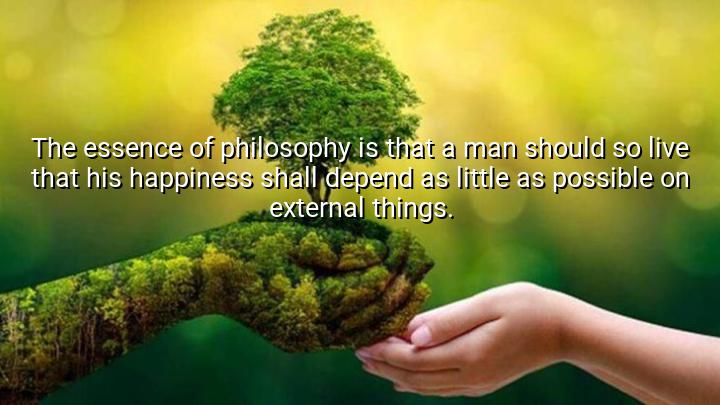




In this quote, Epictetus, an ancient Greek philosopher and Stoic teacher, presents a core idea of Stoicism: that true happiness should not be dependent on external things. He suggests that the essence of philosophy is about cultivating a life where one’s well-being and sense of peace come from within, rather than relying on material possessions, social status, or circumstances outside of our control. Epictetus encourages us to develop inner resilience and self-control, so that we are not swayed by external events or the opinions of others.
The quote highlights the Stoic belief that external factors are often beyond our control, and therefore, attaching our happiness to them is a path to frustration. Instead, Stoicism teaches that we should focus on developing virtue, wisdom, and emotional self-mastery, which allow us to remain steady regardless of the turmoil in the outside world. For Epictetus, true happiness comes from understanding what is within our control—our actions, thoughts, and reactions—and accepting what is not.
The origin of this quote lies in Epictetus’ teachings, which were centered around the idea of inner freedom and autonomy. As a former slave who became a philosopher, Epictetus emphasized that no matter the circumstances, we have the power to shape our internal state. His philosophy focused on accepting hardships and practicing virtue as the path to a fulfilled life, independent of material or external rewards.
Ultimately, Epictetus’ message encourages self-reliance and inner strength. By focusing on what we can control—our thoughts and actions—we can cultivate a happiness that is not dependent on external sources. This approach, rooted in Stoicism, teaches that peace and contentment come from within, allowing us to face life’s challenges with equanimity and resilience.

AAdministratorAdministrator
Welcome, honored guests. Please leave a comment, we will respond soon