

The English language is nobody's special property. It is the property of the imagination: it is the property of the language itself.
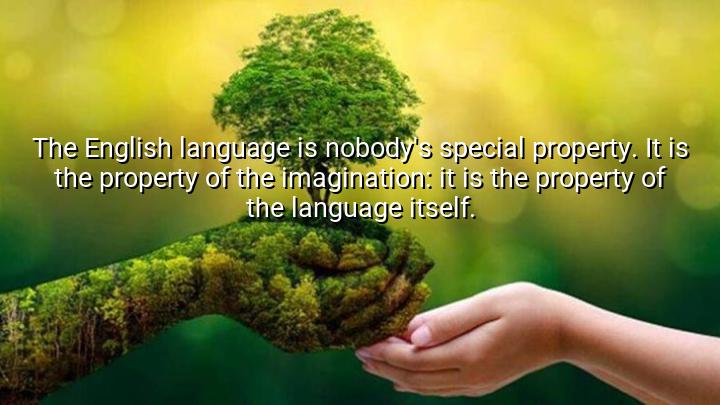




The quote "The English language is nobody's special property. It is the property of the imagination: it is the property of the language itself" by Derek Walcott emphasizes the universality and fluidity of the English language. Walcott, a celebrated poet and playwright from the Caribbean, suggests that no single individual, culture, or nation can claim ownership of the English language. Instead, English belongs to the collective imagination of those who use it, and it evolves through the creativity and expression of its speakers. The quote reflects the idea that language is a living, dynamic entity that takes on new meanings and forms as it is shaped by diverse voices.
Walcott’s statement also highlights the creative potential inherent in language. By saying that English is the property of the imagination, he underscores the role of language as a tool for expression and artistic creation. Language is not just a means of communication, but a medium through which people can invent, dream, and share their inner worlds. Through the power of imagination, English is continually transformed, allowing writers, poets, and speakers to explore new ideas, emotions, and cultural identities.
Furthermore, Walcott’s reference to the language itself suggests that language cannot be confined or restricted by ownership or authority. English, like all languages, belongs to the collective experience of all its users. It is shaped by a global community of speakers, each contributing to its ongoing development. By viewing language in this way, Walcott invites us to see it as a shared resource, one that is enriched by the contributions of individuals from diverse backgrounds.
Ultimately, Walcott’s quote celebrates the fluidity and universality of language. It reminds us that language, especially one as widespread and versatile as English, is constantly evolving and belongs to all who use it. The imagination of individuals, whether poets, writers, or everyday speakers, continues to shape and redefine it, making English a powerful tool for personal and collective expression.

AAdministratorAdministrator
Welcome, honored guests. Please leave a comment, we will respond soon