

The end of education is to see men made whole, both in competence and in conscience.
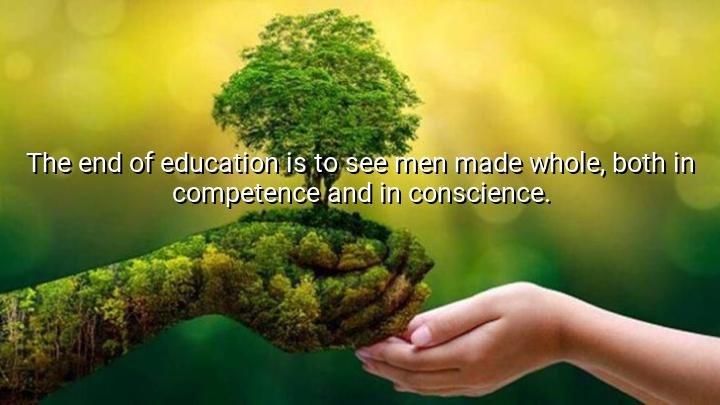




The quote by John Dickey emphasizes the holistic purpose of education. He suggests that the ultimate goal is not merely the acquisition of knowledge or technical competence, but also the development of moral character and conscience. True education, according to Dickey, should aim to cultivate well-rounded individuals who are capable, ethical, and responsible in their personal and professional lives.
By highlighting both competence and conscience, Dickey underscores the dual nature of meaningful education. It is not enough to excel intellectually or professionally; one must also possess ethical awareness and a sense of social responsibility. This perspective reflects the idea that education should nurture both the mind and the character, preparing individuals to contribute positively to society.
The origin of this quote comes from John Dickey (1794–1853), an American educator and former president of Princeton University. Dickey was deeply committed to the integration of moral and intellectual training, believing that universities and schools should prepare students not just for careers but for life as ethical and thoughtful citizens. His writings and speeches often reflected this philosophy of education as a formative, character-building process.
Ultimately, this quote serves as a reminder that the true end of education is to produce individuals who are capable, knowledgeable, and morally grounded. It encourages a vision of learning that balances intellectual development with ethical responsibility, ensuring that education equips people to succeed while also making a positive impact on the world.

AAdministratorAdministrator
Welcome, honored guests. Please leave a comment, we will respond soon