

The death of what's dead is the birth of what's living.
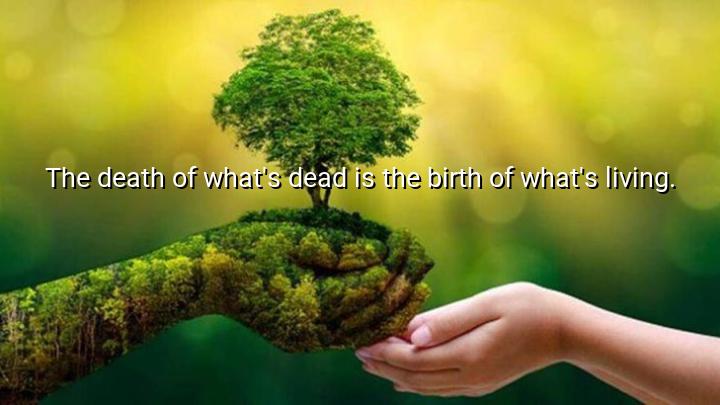




The quote "The death of what's dead is the birth of what's living" by Arlo Guthrie encapsulates a profound reflection on transformation and renewal. Guthrie, an American singer-songwriter known for his folk music, often explores themes of change, societal issues, and personal growth. This quote suggests that in order for something new to emerge, the old or obsolete must fade away. It reflects the cyclical nature of life and the necessity of letting go of outdated concepts or ways of being to allow new life to flourish.
The origin of the quote is tied to Guthrie’s philosophical views on change and the passage of time. In his music and public persona, he has often spoken about the power of rebirth—how each ending can pave the way for a new beginning. The quote could also be seen as a comment on cultural shifts, where older practices, ideas, or even societal structures must give way to new visions and ways of living.
This statement conveys a sense of hope and optimism, implying that even in the face of loss or death, there is potential for something positive to emerge. The death of what is "dead" represents the discarding of what no longer serves us, while the birth of what is "living" symbolizes the growth and possibilities that arise from this space. It's a reminder that change, although sometimes difficult, is often a catalyst for progress and renewal in life and in the world.
Ultimately, Guthrie’s quote is about embracing the inevitable cycles of life and death, understanding that each conclusion makes room for a new chapter. Whether on a personal level or a broader societal scale, the death of what no longer serves us allows for the reawakening of what is vital and alive.

AAdministratorAdministrator
Welcome, honored guests. Please leave a comment, we will respond soon