

The civilian wants to respect what the veteran has gone through. The veteran wants to protect memories that are painful and sacred to him from outside judgment.
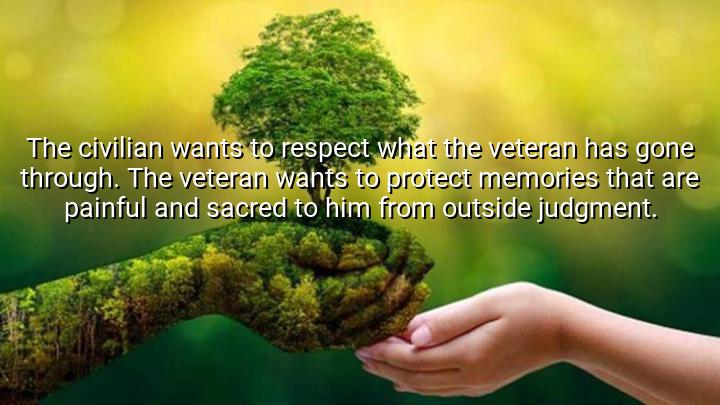




The quote, “The civilian wants to respect what the veteran has gone through. The veteran wants to protect memories that are painful and sacred to him from outside judgment”, by Phil Klay, highlights the complex relationship between veterans and civilians. Klay emphasizes the mutual desire for understanding and respect, while also acknowledging the boundaries that veterans may set around their experiences. The quote captures the tension between empathy and the personal nature of trauma, illustrating that some memories are deeply private and sacred.
Originating from Phil Klay, an American author and Iraq War veteran, the quote reflects his insight into the emotional and psychological challenges faced by those who have served in combat. Klay often writes about the veteran experience, exploring themes of memory, trauma, and civilian perception. His work seeks to bridge the gap between those who have served and the broader society that seeks to honor and understand them.
The quote also conveys a broader social insight: while civilians may wish to honor and empathize, they must also recognize the limitations of their understanding. Veterans’ experiences often involve painful and private moments that cannot be fully shared without risking re-traumatization or misunderstanding. Klay underscores the importance of respecting these boundaries while still acknowledging the value of honoring service.
Ultimately, the quote serves as a reflection on empathy and discretion, reminding civilians to approach veterans’ stories with sensitivity, humility, and respect. It highlights the delicate balance between recognition of service and protection of personal memory, emphasizing that true respect involves both acknowledgment and restraint.
I can also make a shorter, simpler version suitable for quick study notes if needed.

AAdministratorAdministrator
Welcome, honored guests. Please leave a comment, we will respond soon