

The belief that we can rely on shortcuts to happiness, joy, rapture, comfort, and ecstasy, rather than be entitled to these feelings by the exercise of personal strengths and virtues, leads to legions of people who, in the middle of great wealth, are starving spiritually.
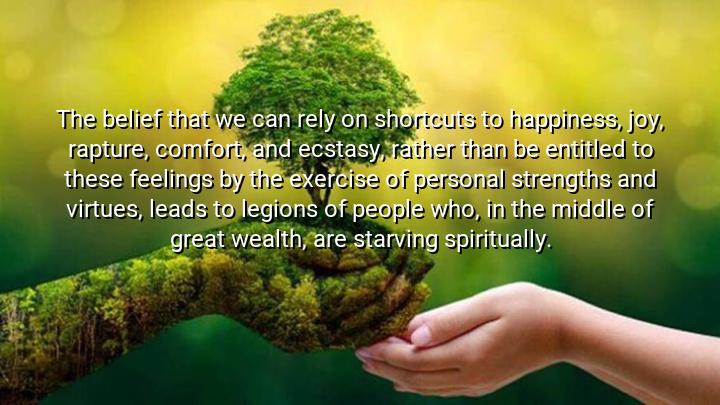




The quote by Martin Seligman, "The belief that we can rely on shortcuts to happiness, joy, rapture, comfort, and ecstasy, rather than be entitled to these feelings by the exercise of personal strengths and virtues, leads to legions of people who, in the middle of great wealth, are starving spiritually," critiques the idea that instant gratification or superficial solutions can lead to lasting emotional fulfillment. Seligman, a psychologist and pioneer of the field of positive psychology, highlights the dangers of seeking quick fixes for deep emotional needs, suggesting that true happiness and fulfillment come from developing and cultivating personal virtues, strengths, and resilience, rather than relying on fleeting or external sources.
Seligman argues that happiness is not something that can be bought or obtained through shortcuts, such as wealth or material possessions. Instead, it is the product of personal growth, inner strength, and the practice of virtues like kindness, perseverance, and gratitude. The pursuit of joy and comfort must be grounded in the development of one's character, not just the accumulation of things or fleeting pleasures. By focusing on lasting qualities that build inner strength, individuals are more likely to experience true and sustainable happiness.
The quote also addresses the paradox that, despite great wealth, many people feel spiritually empty or unfulfilled. Seligman suggests that material abundance cannot satisfy the deeper, intrinsic human needs for meaning, purpose, and connection. People may be financially prosperous yet still feel disconnected, lost, or emotionally impoverished if they have not cultivated the virtues and strengths that lead to lasting happiness.
Ultimately, the message of this quote is a call to focus on personal development and inner well-being as the true sources of happiness and spiritual fulfillment. Rather than seeking shortcuts to ecstasy or relying on external factors, Seligman emphasizes the importance of building a life based on virtue, resilience, and the authentic pursuit of joy. This approach leads to a deeper, more meaningful sense of well-being that cannot be replaced by temporary fixes or material wealth.

AAdministratorAdministrator
Welcome, honored guests. Please leave a comment, we will respond soon