

That's what religion teaches: that life is a temporary thing which is going to dissolve one day.
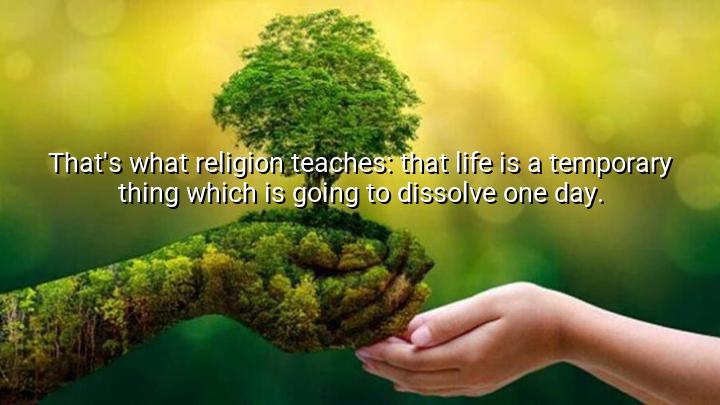




In this quote, Leila Aboulela, a Sudanese author, touches on a central teaching of many religions—that life is transient and will eventually come to an end. By stating that religion teaches life is temporary, she reflects on the idea that human existence is fleeting, a perspective shared across various faiths. This understanding encourages people to live with a sense of impermanence and to focus on what truly matters beyond the material world, recognizing that all things will eventually dissolve or pass away.
The phrase, "life is a temporary thing," encapsulates the idea that human beings are on a journey, and that existence is not permanent. In many religions, this belief helps to foster a sense of humility, as it underscores the idea that humans should not cling too tightly to worldly attachments. The awareness of life’s transience can encourage individuals to focus on spiritual growth, relationships, and the pursuit of meaning, rather than material success or short-term pleasures.
Aboulela’s statement also suggests that religion offers a framework for making sense of life’s impermanence. For many people of faith, this temporary nature of existence prompts reflection on what lies beyond death and encourages a deeper connection with the divine or with the eternal. It shapes how individuals navigate their everyday lives, influencing their decisions, priorities, and perspectives on hardship or loss.
Ultimately, Aboulela’s quote is a reflection on how religion provides a lens through which we view the fleeting nature of life, urging us to live with awareness of our mortality and to seek meaning in the moments we have. The idea that life will dissolve one day challenges us to consider the broader purpose of our existence and the spiritual truths that may guide us through this temporary journey.

AAdministratorAdministrator
Welcome, honored guests. Please leave a comment, we will respond soon