

That's the big mistake the environmental movement made - 'We'll scare the hell out of you, and you'll become an activist'.
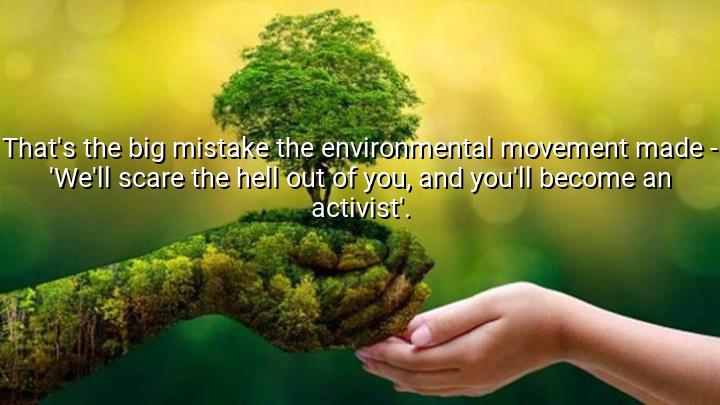




In this quote, Naomi Klein critiques a common strategy used by the environmental movement to raise awareness about issues like climate change and ecological destruction. She points out that some environmental campaigns have relied on fear tactics, aiming to scare people into action by emphasizing the dire consequences of environmental neglect. Klein argues that this approach is a mistake because it assumes that fear alone will motivate people to become activists. However, fear can often lead to paralysis rather than inspiration, leaving people overwhelmed and unsure of how to respond.
Klein’s criticism highlights a deeper issue within the environmental movement: the need for a more empowering and inclusive approach to activism. Simply shocking people into action may not create the lasting engagement necessary for real change. Instead, Klein suggests that a more effective strategy would involve inspiring individuals to act by offering hope, solutions, and a clear path forward, rather than just dwelling on the negative aspects of environmental challenges.
The origin of this quote comes from Klein’s work as a journalist, author, and environmental activist. Known for her critical analysis of corporate capitalism and its environmental impact, Klein often challenges conventional approaches to activism. This quote reflects her belief in the importance of building a positive and inclusive movement that encourages people to see themselves as active participants in the fight for a more sustainable and equitable world, rather than as passive recipients of fear-based messages.
Ultimately, Klein’s words call for a shift in the way environmental issues are communicated to the public. Rather than relying on fear and panic, she advocates for a more hopeful and solution-oriented approach to environmental advocacy, one that engages people by showing them that they can make a difference and be part of a collective effort to address global environmental challenges.

AAdministratorAdministrator
Welcome, honored guests. Please leave a comment, we will respond soon