

Thank God men cannot fly, and lay waste the sky as well as the earth.
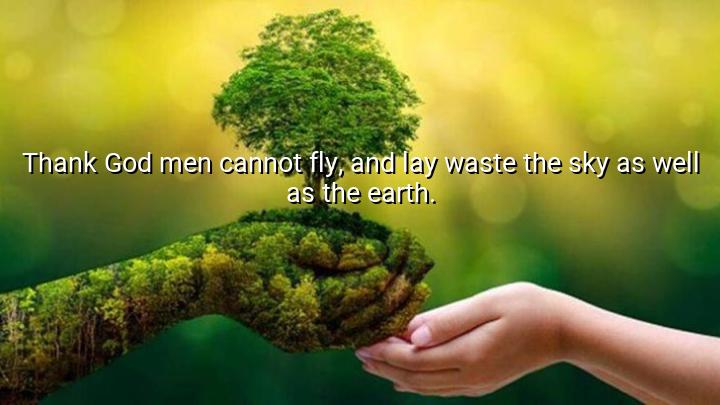




In this quote, Henry David Thoreau expresses a deep concern about human nature and its potential for destruction. Thoreau is known for his writings on nature and the importance of living a simple, harmonious life with the environment. By stating, "Thank God men cannot fly," he is reflecting on the destructive capacity of humans and how, if given the ability to conquer the skies, they would likely extend their tendencies to exploit and harm the earth to the heavens as well.
The phrase “lay waste the sky” serves as a metaphor for human greed and irresponsibility. Thoreau, who was a passionate advocate for environmental conservation, feared that human progress, particularly technological advancements, could lead to the destruction of both the earth and the natural world in ways that would be irreversible. He believed that humanity's unchecked exploitation of the earth's resources was already a troubling issue, and the idea of flying would only expand that destructive impulse into the sky, further harming the environment.
Thoreau’s statement reflects his deep respect for the natural world and his belief in the interconnectedness of all life. His concern was not just about the physical damage humans could cause, but about the mindset that underlies such actions—seeing the world as something to conquer and exploit. The sky, symbolizing the ultimate frontier, represents the last unspoiled realm, and Thoreau feared that once humans could reach it, they would bring their destructive tendencies with them.
Ultimately, the quote serves as a cautionary reflection on the potential dangers of unchecked progress and the consequences of human dominion over nature. Thoreau urges a more humble, respectful approach to the environment, emphasizing the importance of preserving the balance between humanity and the natural world.

AAdministratorAdministrator
Welcome, honored guests. Please leave a comment, we will respond soon