

Tell me what you do with the food you eat, and I'll tell you who you are. Some turn their food into fat and manure, some into work and good humour, and others, I'm told, into God. So there must be three sorts of men.
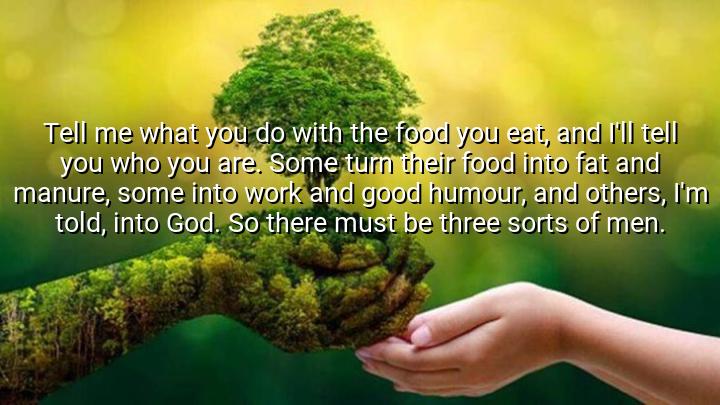




The quote "Tell me what you do with the food you eat, and I'll tell you who you are. Some turn their food into fat and manure, some into work and good humour, and others, I'm told, into God. So there must be three sorts of men." by Nikos Kazantzakis offers a philosophical reflection on human nature, purpose, and the way our physical habits reflect our spiritual and moral orientation. Kazantzakis, a prominent Greek writer and thinker, best known for Zorba the Greek, often explored themes of existence, faith, and the soul’s struggle toward transcendence. In this quote, he uses the metaphor of food to categorize different types of people and how they channel the energy of life.
The first group, those who turn food into "fat and manure," symbolizes people who live only for bodily pleasure, consumption, and base needs. These individuals do not rise above their animal instincts, and their lives are largely defined by physical survival and excess. The second group, who transform food into "work and good humour," represents those who use their energy for constructive action, creativity, and to contribute to the world with positivity and joy.
The third and most spiritually elevated group, those who turn food "into God," alludes to mystics, monastics, or deeply spiritual individuals who treat life—even the act of eating—as a sacrament. For them, physical nourishment is a means to pursue divine union, enlightenment, or service to a higher purpose. Kazantzakis suggests that how we metabolize the most basic act of living—eating—can reveal the essence of our being.
Ultimately, this quote reflects Kazantzakis’s view of humanity as divided by intention and aspiration. He invites us to consider not just what we consume, but what we do with our energy, our choices, and our existence. In doing so, he blends physicality with spiritual symbolism, offering a profound reminder that everyday acts—like eating—can be deeply expressive of our values, our identity, and our relationship with the world and the divine.

AAdministratorAdministrator
Welcome, honored guests. Please leave a comment, we will respond soon