

Stark inequality, poverty, and unemployment are driving increased social unrest and, consequently, social and economic risk. Environmental deterioration may well intensify social inequality.
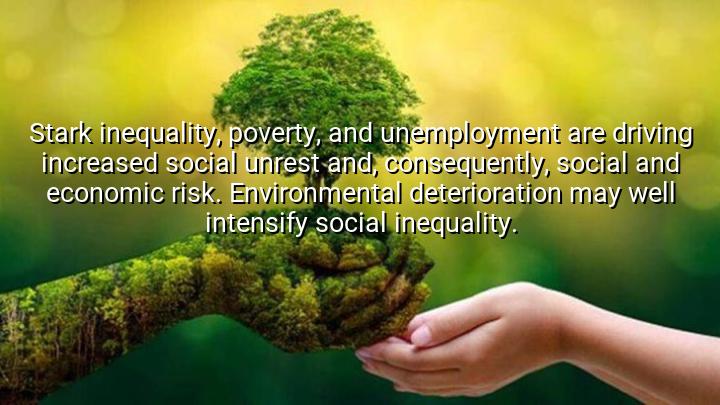




The quote by Sharan Burrow highlights the interconnectedness of social, economic, and environmental challenges. She emphasizes that stark inequality, poverty, and unemployment are major drivers of social unrest, which in turn increases both social and economic risk. Burrow suggests that addressing these issues is not just a moral imperative but also essential for maintaining stability and sustainable development.
Burrow further points out that environmental deterioration can exacerbate existing social inequality. Communities that are most vulnerable—often low-income populations—tend to suffer disproportionately from pollution, climate change, and resource scarcity. This connection underscores the idea that environmental issues are deeply tied to social justice and economic resilience, and that neglecting one dimension can amplify problems in others.
The origin of this perspective comes from Burrow’s work as the General Secretary of the International Trade Union Confederation (ITUC), where she has consistently addressed the intersections of labor rights, social equity, and sustainability. Her statements reflect a comprehensive view of global development challenges, advocating for policies that consider both human and environmental well-being.
Ultimately, the quote emphasizes the need for integrated solutions to inequality, unemployment, and environmental degradation. Burrow warns that failure to address these linked issues can lead to greater social unrest and economic instability, highlighting the importance of inclusive, sustainable approaches that promote equity and resilience for all communities.

AAdministratorAdministrator
Welcome, honored guests. Please leave a comment, we will respond soon