

Someone who is about to die does not mourn the dead.
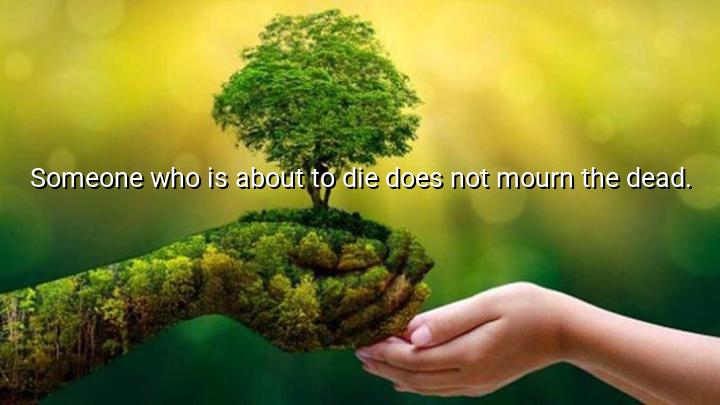




Friedrich Dürrenmatt’s quote, "Someone who is about to die does not mourn the dead," suggests a profound insight into the human experience of mortality. The quote implies that the inevitability of death forces individuals to focus on their own impending end, rather than the loss of others. When facing one's own mortality, the natural instinct is often to reflect on one’s own life, leaving little room for grieving the death of others. The approaching end can create a shift in perspective, where survival instincts and thoughts of personal fate dominate, overshadowing the mourning of those who have passed.
Dürrenmatt's statement also touches on the psychological experience of death. When a person is confronted with the reality of their own death, their emotional and mental energies are often consumed by self-preservation or the existential reality of facing the unknown. As a result, the grief typically associated with the death of loved ones can feel distant or irrelevant, especially when one is consumed with their own fear or acceptance of their finality.
Dürrenmatt, a Swiss playwright and novelist, often explored themes of existentialism, absurdity, and the human condition in his works. His works like The Visit and The Pledge delve into the complex relationships between individuals and death, often questioning the meaning of life and the inevitability of fate. This quote reflects his exploration of how human consciousness changes when faced with mortality, emphasizing the profound shift in priorities when one is confronted with their own end.
The origin of this quote lies in Dürrenmatt's broader philosophical musings about life and death. It reflects his belief that the awareness of impending death alters our emotional responses and that the traditional rituals of mourning may not always apply when an individual is in the process of accepting their own mortality. This statement encapsulates his exploration of the absurd nature of human existence and the personal transformation that comes with facing death head-on.

AAdministratorAdministrator
Welcome, honored guests. Please leave a comment, we will respond soon