

So to hope to be able to have peace, to be able to have justice and environmental balance, are consequences of our behavior, not just our intentions.
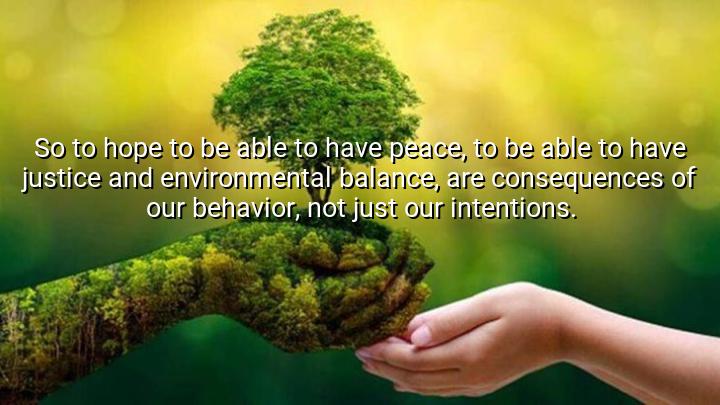




The quote by Godfrey Reggio emphasizes that achieving peace, justice, and environmental balance is the result of actions rather than merely intentions. Reggio stresses that positive outcomes in society and the natural world depend on how people behave and make choices, highlighting the practical responsibility individuals and communities have in shaping their surroundings.
By linking peace, justice, and environmental balance to human behavior, Reggio suggests that ethical principles and good intentions alone are insufficient. Meaningful change requires consistent, deliberate action that aligns with values and addresses real-world challenges, from social inequities to environmental degradation. This perspective underscores the importance of responsibility and accountability in creating a sustainable and just world.
The origin of the quote comes from Reggio’s work as a filmmaker and environmental advocate, particularly known for the Qatsi Trilogy, which explores the relationship between human civilization, technology, and the natural environment. His films and commentary often encourage reflection on how human behavior impacts the planet and society, promoting conscious and purposeful engagement.
Overall, the quote conveys the message that intentions alone are not enough to foster peace, justice, and environmental sustainability. It highlights the necessity of translating values into concrete actions, showing that the consequences of our behavior shape the kind of world we leave for future generations.

AAdministratorAdministrator
Welcome, honored guests. Please leave a comment, we will respond soon