

Sleep is good, death is better; but of course, the best thing would to have never been born at all.
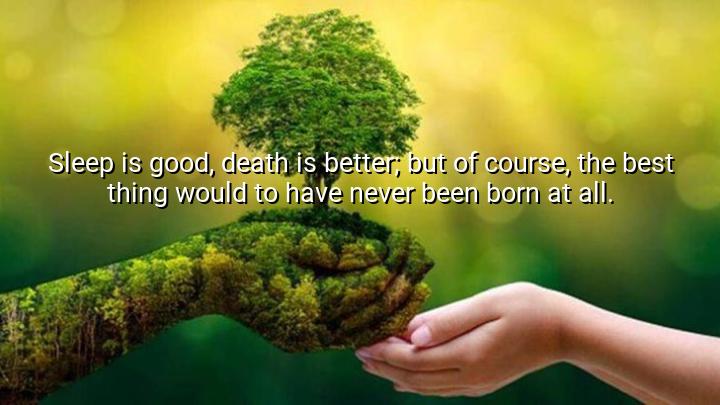




The quote by Heinrich Heine, "Sleep is good, death is better; but of course, the best thing would be to have never been born at all," expresses a deeply pessimistic and existential view on life, highlighting themes of suffering, mortality, and the burdens of existence. Heine compares sleep—a temporary escape or relief from consciousness—to death, which he sees as a preferable release from life’s hardships. Ultimately, he suggests that the greatest relief would be to have never entered into existence, reflecting a profound sense of despair or disillusionment with life itself.
Heinrich Heine, a German poet and essayist of the 19th century, often explored themes of melancholy, irony, and social criticism in his works. This quote reflects his Romantic-era engagement with existential questions and the darker aspects of the human condition. Heine's contemplation of birth, death, and existence resonates with philosophical pessimism, where the inherent struggles of life lead to questioning the value of life itself.
The origin of this quote can be found in Heine’s poetic and literary writings, where he frequently combined lyrical beauty with sharp critique and introspection. It captures the tension between life’s fleeting pleasures and its inevitable pains, a common theme in Romantic literature and philosophy. His expression of preferring non-existence aligns with existential concerns about meaning, suffering, and the human predicament.
Ultimately, the quote serves as a somber meditation on the human experience. Heinrich Heine’s words challenge readers to confront uncomfortable truths about life, mortality, and the desire for relief from suffering, inviting reflection on the meaning and value of existence itself.

AAdministratorAdministrator
Welcome, honored guests. Please leave a comment, we will respond soon